At My Mother’s Sunday Dinner, My Sister Rolled Her Eyes and Said I Was “Just Bitter Because No One Needs Him Anymore,” and the Family Laughed—Even Though I Was Still Paying the Insurance, Utilities, Repairs, and Grocery Shortfall on the House She’d Been Living In for Four Years While Telling Everyone She and Mom Were Finally Managing Fine Without Me.
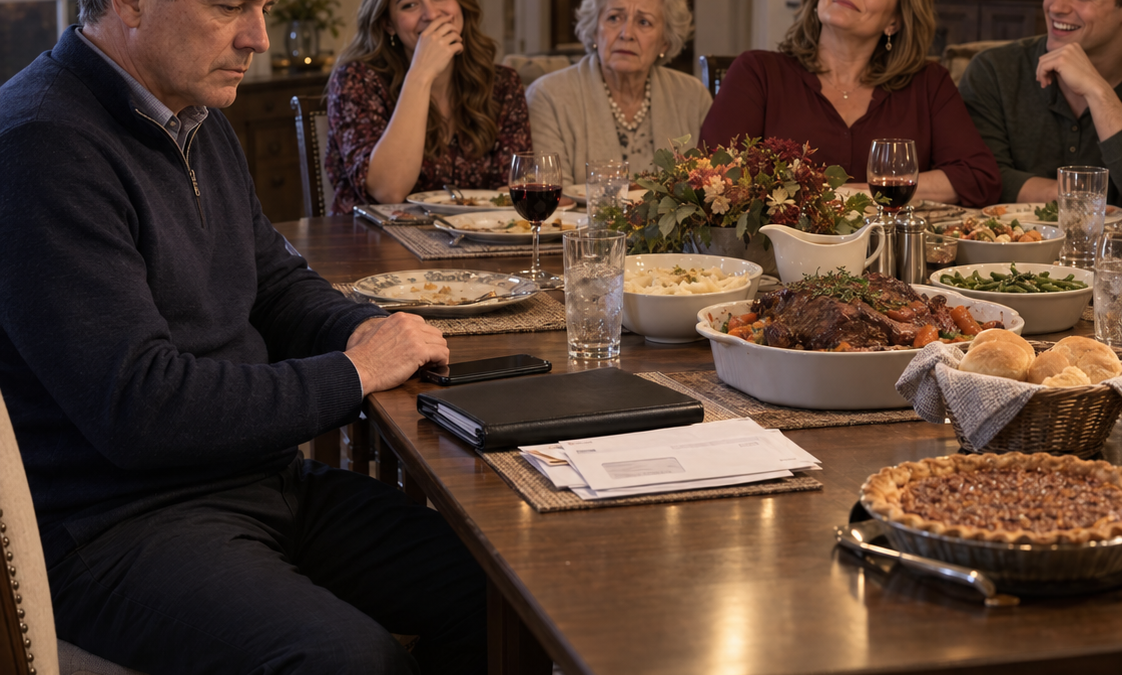
My sister waited until everyone was laughing before she said it.
“He’s just bitter because no one needs him anymore.”
Dana rolled her eyes toward me as though she had finally diagnosed a condition everyone else was too polite to mention.
My nephew Noah laughed.
My niece Brooke covered her mouth and looked down at her plate.
Even my mother gave a small, uncertain chuckle.
I was fifty-nine years old, sitting at the dining table in the Raleigh house where my parents had lived since 1989.
The same house whose electric bill had come out of my checking account that morning.
I looked at Dana.
“What exactly am I bitter about?”
She waved one hand.
“This. You always having to manage everything.”
We had been talking about the garage.
Brooke, twenty-five, wanted to convert half of it into a bedroom so her boyfriend could move in.
She had shown everyone photographs on her phone.
New flooring.
Built-in shelves.
A wall separating the old workbench from the new bedroom space.
I had asked one question.
“How much is it going to cost?”
Brooke shrugged.
“Probably six or seven thousand.”
“And who’s paying?”
That was apparently where I went wrong.
Dana said they would “figure it out.”
I pointed out that the homeowners insurance had increased, the roof was nearing the end of its useful life, and Mom’s property-tax bill would arrive in a few months.
I did not say they could not renovate the garage.
The house belonged to my mother.
I said only that someone should look at the numbers first.
Dana leaned back.
“See?”
“What?”
“You can’t help yourself.”
“Help myself from what?”
“Being in charge.”
Noah smiled.
“You do kind of turn everything into a spreadsheet, Uncle Mike.”
“That’s because spreadsheets prevent six-thousand-dollar surprises.”
Dana laughed.
Then came the line.
“He’s just bitter because no one needs him anymore.”
And everybody laughed.
Not cruelly.
That almost made it worse.
Cruel laughter gives you something clear to be angry about.
This was casual.
Familiar.
The kind of family joke that only works because everyone has accepted part of the premise.
I looked at my mother.
She immediately reached for the serving spoon.
“Who wants more potatoes?”
The subject changed.
Dinner continued.
Twenty minutes later, while I was putting on my coat, Dana followed me into the hallway.
“Hey, before you go.”
I turned.
“The AC company called again.”
“What about?”
“The service agreement renews Friday.”
“Okay.”
“And the internet went up.”
“How much?”
“I don’t know. Like twenty dollars.”
I stared at her.
She frowned.
“What?”
“Nothing.”
“You’re being weird.”
“No.”
I slipped my arms into my coat.
“I’m listening.”
She lowered her voice.
“Don’t make a whole thing out of what I said.”
“I haven’t.”
“It was a joke.”
“I know.”
“Good.”
Then she added:
“So you’ll handle the AC thing?”
That was the moment.
Not the laughter.
Not the insult.
That question.
You are unnecessary.
Also, please renew the maintenance contract before Friday.
I drove home without answering her.
My name is Michael Turner.
For most of my adult life, I had been useful.
I do not mean that as a boast.
Useful was simply the role I learned early.
My father, Frank, could repair anything mechanical but hated paperwork.
My mother, Ruth, could organize an entire church fundraiser but would forget to open an insurance renewal notice until three days before it expired.
Dana was seven years younger than me.
When we were kids, I helped with homework, fixed bicycle chains and drove her to school after I got my license.
Being useful felt normal.
Then adulthood happened.
I married.
Had two children.
Built a career managing commercial HVAC service contracts.
Ironically, that meant I spent thirty-five years being paid to make sure complicated things continued working before anybody noticed they might fail.
My marriage ended eleven years ago.
Not badly.
Not dramatically.
My former wife, Karen, and I simply became unhappy enough for long enough that eventually staying together seemed more dishonest than separating.
Our daughter Erin moved to Austin.
Our son Luke moved to Colorado.
They called.
We visited.
We loved one another.
But nobody needed me to change a tire at ten o’clock at night anymore.
Then Dad died.
Heart failure.
Fast enough that none of us were ready.
For the first year afterward, Mom stayed alone in the house.
I began helping with practical things.
Insurance.
Contractors.
The tax bill.
A leaking shower.
The furnace service.
Things Dad had always done.
Then Dana’s marriage collapsed.
She and her daughter Brooke moved into Mom’s house.
Six months, she said.
Noah was away at college then.
The arrangement made sense.
Mom hated living alone.
Dana needed somewhere inexpensive.
I was relieved the house had people in it.
Six months became a year.
Then two.
Noah graduated and moved in while looking for work.
By year four, the house held four adults.
Mom.
Dana.
Brooke.
Noah.
And financially, a fifth invisible one.
Me.
It did not happen through one big conversation.
That was important.
No one sat me down and said, “Michael, we expect you to finance this household.”
The electric bill rose after Dana moved in.
Mom complained.
I said, “Put it on my card.”
The gas bill followed.
Then the internet because Dana worked partly from home and said the old plan was unreliable.
Then homeowners insurance jumped by nearly forty percent.
Mom’s pension was already stretched.
I covered it.
The lawn service.
Pest control.
Emergency plumbing.
A water heater.
Part of the groceries.
When the refrigerator compressor failed, I paid for the repair because it was easier than watching everyone debate it for a week.
Every individual decision seemed reasonable.
Together, they had created a system no one talked about.
Including me.
When I got home after Sunday dinner, I opened my laptop.
I pulled twelve months of bank statements.
Then twenty-four.
Then forty-eight.
I built the spreadsheet Noah had teased me about.
Electricity.
Gas.
Internet.
Homeowners insurance.
Lawn.
Pest control.
Repairs.
Appliances.
Grocery transfers to Mom.
The occasional property-tax shortfall.
I did not count gifts.
Birthdays.
Christmas.
Money I had given Brooke when her car needed brakes.
The laptop I bought Noah after graduation.
Those were separate.
I counted only household costs.
The total over four years was $57,840.
I stared at the number.
It was not enough to ruin me.
I had a good salary.
My mortgage was nearly paid.
I had savings.
That was probably why I never forced the conversation.
Money had made avoidance affordable.
Then I noticed something else.
I had paid $1,986 the previous month.
Four adults lived in that house.
I did not.
At 9:10 the next morning, I called Mom.
She answered immediately.
“Are you mad at Dana?”
“Not exactly.”
“That means yes.”
“I’m thinking.”
“That sounds worse.”
I smiled despite myself.
“Mom, do you remember what Dana said?”
A long pause.
“Yes.”
“You laughed.”
“I shouldn’t have.”
“No. But I want to ask something.”
“All right.”
“Do you think I’m trying to control the house?”
She hesitated.
That was answer enough.
“Sometimes,” she finally said.
“Why?”
“You like knowing everything is handled.”
“That isn’t the same.”
“I know.”
“Do you?”
Another pause.
Then Mom said something I had not expected.
“Dana says you need to feel useful.”
I leaned back in my chair.
“She says that?”
“She says you get upset when we do things without you.”
I thought about the garage.
Maybe that was how it looked.
“Does she also tell you how much I pay?”
Mom became quiet.
“I know you help.”
“How much do you think?”
“I don’t know.”
“Guess.”
“Michael.”
“Guess.”
“Maybe five or six hundred a month?”
I closed my eyes.
“Last month was just under two thousand.”
She stopped breathing for a moment.
“What?”
“That was a heavy month. But yes.”
“Why would you do that?”
The question irritated me at first.
Then I realized it was exactly the question I needed.
Why would I?
Because Mom needed help.
Because Dana’s divorce was hard.
Because Brooke was starting her career.
Because Noah was finding his feet.
Because I could.
All true.
Also because every time somebody called, I mattered.
That part was harder.
“I don’t know,” I said.
Mom sounded frightened.
“Are you stopping everything?”
“No.”
“Michael—”
“I’m not shutting off utilities. I’m not leaving anybody with a surprise bill.”
She exhaled.
“I’m going to give everyone sixty days.”
“For what?”
“To take over.”
“I don’t know how to do all that online.”
“You won’t have to do it alone.”
“Dana?”
“Dana. Brooke. Noah. The adults who live there.”
Mom was quiet.
Then:
“Are you still my son?”
I almost laughed.
“What kind of question is that?”
“You sound like a banker.”
That landed.
I softened.
“Yes, Mom. I’m your son.”
“Good.”
“I’ll still take you to lunch.”
“Good.”
“I’ll still come when you need me.”
“Good.”
“But needing me cannot automatically mean needing my checking account.”
She did not answer immediately.
Then she said:
“That sounds fair.”
Saturday morning, I went to Office Depot.
I bought a three-inch black binder.
Tabs.
Sheet protectors.
A cheap calculator.
By Saturday afternoon, the entire house existed inside that binder.
Electric company.
Gas company.
Internet.
Insurance agent.
Lawn service.
Pest company.
HVAC service.
Plumber.
Roofing company that had inspected the house two years earlier.
Every account.
Every due date.
Every login-transfer instruction I could legally provide.
I also included a twelve-month average for each category.
Then I added one page at the front.
What Michael currently pays: average $1,412/month, excluding major repairs.
I almost removed that page.
It felt theatrical.
Then I realized the absence of that number was part of the problem.
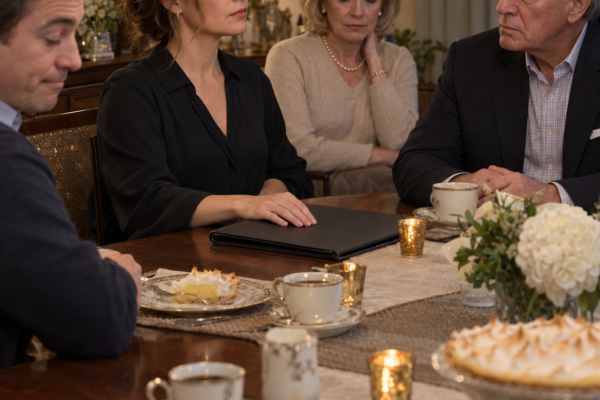
Sunday afternoon, Mom asked everyone to be home.
Dana arrived fifteen minutes late carrying an iced coffee.
Brooke sat at the kitchen table.
Noah leaned against the counter.
I put the binder down.
Dana looked at it.
“What is that?”
“The house.”
She laughed.
“No, seriously.”
“I am serious.”
I sat.
“Starting July first, I won’t manage or pay the household accounts.”
Dana’s smile disappeared.
“What?”
“Nothing changes today.”
I opened the first tab.
“Electric stays on. Insurance stays active. Every bill already due is covered.”
Mom sat quietly beside me.
“You have sixty days.”
Dana looked at her.
“You knew about this?”
“Since Monday.”
“And you’re okay with it?”
Mom folded her hands.
“I didn’t know how much your brother was paying.”
Dana looked back at me.
“This is because of Sunday.”
“Sunday made me look at it.”
Brooke said, “So you’re just cutting Grandma off?”
“No.”
I turned the binder toward them.
“Your grandmother has income. The issue is that this house has four adults using utilities, groceries, internet and maintenance while one adult who doesn’t live here has been quietly absorbing the difference.”
Dana crossed her arms.
“You offered.”
“Yes.”
“For years.”
“Yes.”
“And now because I made one joke—”
“This isn’t about one joke.”
“It obviously is.”
I looked at her.
“The joke was that nobody needs me.”
Dana rolled her eyes.
“Mike—”
“I’m agreeing with you.”
That stopped her.
“If you don’t need me, that’s good.”
“That isn’t what I meant.”
“What did you mean?”
She looked around the room.
“I meant you don’t have to control everything.”
“Great.”
I pushed the binder toward her.
“Then control it.”
Noah stopped leaning against the counter.
Brooke looked down at the cover.
Dana did not touch it.
“Mom can’t afford all this.”
“I’m not asking Mom to.”
“Then who?”
I looked at the three of them.
Nobody answered.
That silence was the first honest household-budget meeting we had ever had.
Dana opened the binder.
She flipped to the summary page.
Her face changed.
“This can’t be right.”
“It is.”
“You pay all this?”
“Yes.”
“Why?”
I almost laughed.
Mom answered for me.
“Apparently because we let him.”
Dana looked at her.
Mom continued.
“I thought he liked it.”
“So did I.”
I nodded.
“So did I.”
That surprised Dana.
I sat back.
“I did like being useful.”
Nobody spoke.
“After Dad died, after my kids moved away, after my divorce—I liked being the person people called.”
Dana’s expression softened for perhaps two seconds.
Then I continued.
“But liking being useful is not the same as agreeing to be financially responsible for four adults forever.”
She looked down at the page.
Noah finally pulled out a chair.
“What would everybody actually have to pay?”
That was the question.
Not How do we make Michael keep paying?
What would everybody have to pay?
We spent the next two hours answering it.
Mom could contribute $900 a month toward household costs without touching savings.
Dana earned $71,000 working for a medical billing company.
She had been contributing groceries inconsistently and no formal household payment.
Brooke earned $42,000 at an interior-design showroom.
Noah had recently started full-time work with a logistics company at $46,000.
None of them were wealthy.
None were unable to contribute.
The problem was simpler.
No one had ever been required to.
By the end of the meeting, they had a tentative budget.
Dana would handle electric, gas and insurance.
Brooke would pay internet and groceries.
Noah would take lawn service, pest control and a fixed monthly contribution toward repairs.
Mom would cover taxes and part of groceries as she always had.
The garage renovation disappeared from the conversation.
Brooke did not complain.
That surprised me.
Dana did.
“This leaves me with almost no extra money.”
I looked at her leased Lexus parked outside.
I did not mention it.
Not my budget anymore.
She saw me look.
Her face tightened.
“Don’t.”
“I didn’t say anything.”
“You were thinking it.”
“Probably.”
Mom laughed.
A real laugh.
Not at me.
The next sixty days were uncomfortable.
Dana called the first week because the electric company required identity verification.
I explained where the information was in the binder.
She said, “Can’t you just do it?”
I said, “I could. But then we’re back where we started.”
She hung up irritated.
Ten minutes later, she handled it.
Noah forgot the lawn-service renewal.
The grass grew too long.
The homeowners association sent a courtesy notice.
Nobody died.
He renewed it himself.
Brooke discovered groceries for four adults cost much more than she thought.
She started shopping at Aldi for staples and stopped buying prepared lunches every workday.
She did not thank me for teaching her a lesson.
Good.
I was not trying to teach one.
I was trying to stop preventing ordinary consequences.
The hardest adjustment was mine.
One Tuesday evening, Mom called.
“The upstairs toilet is making that sound again.”
My reflex activated instantly.
I knew the plumber.
I had his number.
I could solve it in two minutes.
Instead I asked:
“Did you tell Dana?”
“She’s at work.”
“Noah?”
“He’s here.”
“Then give him the plumber page in the binder.”
Mom sighed.
“You really mean this.”
“Yes.”
“All right.”
I sat in my living room for the next hour thinking about a toilet.
That was ridiculous.
At 8:40, Mom texted.
Noah handled it. $165. He even remembered to ask for a receipt.
I smiled.
Then I felt unexpectedly sad.
Dana’s joke returned.
No one needs him anymore.
Maybe they did not.
At least not in the way I had trained them to.
That should have felt like success.
Instead, part of me felt replaced.
That was when I understood why stepping back was harder than writing checks.
I had built an identity around being necessary.
If I stopped solving problems, I had to trust there was still a reason for people to call me.
Mom answered that question gradually.
She began inviting me to lunch.
Not because a bill was due.
Because she wanted lunch.
Sometimes we went to a diner near her church.
Sometimes I brought sandwiches to the house.
We talked about Dad.
Her neighbors.
My kids.
Books she was reading.
It occurred to me that for years our conversations had opened with a problem.
Now sometimes they opened with nothing at all.
That was better.
Dana and I took longer.
For nearly three months, every conversation had an edge.
Then one Saturday she called.
I almost ignored it.
“Hey,” she said.
“Hey.”
“Can I ask you something?”
“Depends.”
“The insurance renewal came.”
I sighed.
“Dana.”
“No, no. I’m not asking you to pay it.”
I waited.
“I want to know if the deductible option makes sense.”
That was different.
She was asking for advice.
Not transfer.
Not rescue.
Advice.
We talked for ten minutes.
At the end, she said, “Thanks.”
“You’re welcome.”
Then, awkwardly:
“I didn’t know.”
“Know what?”
“How much.”
I was quiet.
“I really thought you liked paying everything because it made you feel important.”
“I did like feeling important.”
“That doesn’t mean I should’ve let you pay.”
“No.”
Another pause.
“I’m sorry about the dinner.”
I believed her.
Not because the apology was dramatic.
Because nothing followed it.
No request.
No emergency.
No bill.
“Thank you.”
By October, the new system was normal.
Dana turned in the Lexus.
She bought a four-year-old Honda CR-V.
I learned about it from Mom.
Brooke postponed the garage renovation and eventually moved into an apartment with her boyfriend instead.
Noah started putting money into a repair account before anything broke.
The house did not collapse.
That mattered to me.
So did the fact that nobody had to lose everything for me to regain a boundary.
Thanksgiving came eight months after the dinner where Dana had made the joke.
I arrived carrying two pies.
My car was the fourth vehicle in the driveway.
Inside, the house smelled like turkey and sage.
Dana was arguing with Noah about rolls.
Mom was sitting in Dad’s old chair telling everyone they were both wrong.
I put the pies on the counter.
Dana looked at them.
“You bought pumpkin?”
“And pecan.”
“I said Mom wanted apple.”
“You can handle the desserts yourself next year.”
She stared at me.
Then laughed.
“So controlling.”
I laughed too.
The joke felt different because the structure underneath it had changed.
During dinner, Mom asked me about Erin’s new job in Austin.
Brooke showed me photographs of her apartment.
Noah told me he was considering certification courses at work.
Nobody mentioned bills.
Halfway through dessert, there was a loud metallic thump from the kitchen.
Then the dishwasher stopped.
Everyone froze.
Four faces turned toward me automatically.
For one second, the old system returned.
Michael.
Problem.
Fix it.
Dana caught herself first.
“Nope.”
She pointed her fork at me.
“Don’t move.”
I leaned back.
“I wasn’t moving.”
“You were thinking about it.”
“Probably.”
She stood and looked at Noah.
“Breaker first?”
He nodded.
“I’ll check.”
Brooke pulled out her phone.
“I have the appliance guy from last time.”
Mom slid the pecan pie closer to me.
“You’re here to eat.”
I looked around the table.
The dishwasher was still broken.
Dana and Noah were arguing in the hallway about the electrical panel.
Brooke was searching for a repair number.
Nobody needed my credit card.
Nobody needed my login.
Nobody needed me to take charge.
Mom cut another slice of pie and put it on my plate without asking.
I picked up my fork.
For years, I had confused being needed with belonging.
It turned out they were not the same thing.
And once I finally stopped insisting on the first, I had room to notice the second.