One Week Before My Brother’s Engagement Party, He Asked Me Not to Come Because His Fiancée’s Wealthy Family Might Be Embarrassed by My Small Condo, Old Honda, and “Ordinary Housing Job”—Then My Parents Agreed I Would Have Nothing to Talk About With People That Successful.
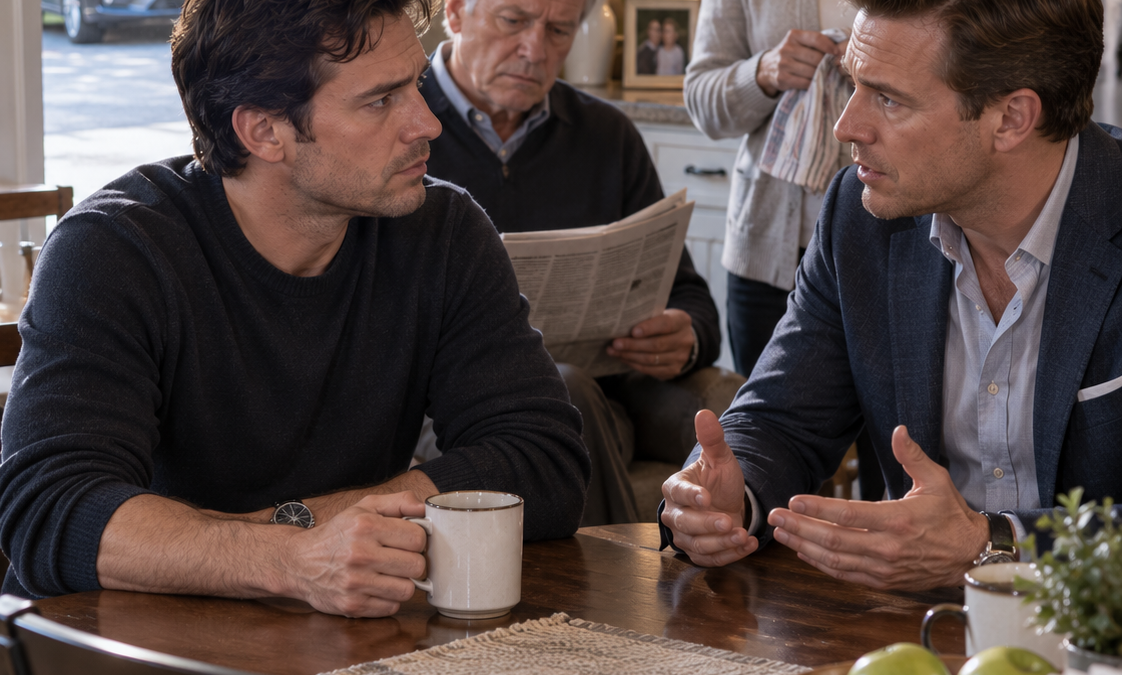
My brother asked me not to attend his engagement party at our parents’ kitchen table.
I remember that detail because there was something strangely efficient about humiliating someone in the same room where your mother used to pack his school lunches.
Colin had invited me over on Sunday afternoon.
“Mom wants everybody together before Saturday.”
That sounded believable.
Our parents lived in the same suburban Minneapolis house where we had grown up.
Colin was thirty-nine.
I was thirty-six.
There were photographs of both of us lining the hallway.
Baseball.
Graduations.
Christmas mornings.
Two brothers who, if you looked only at the walls, had apparently spent their entire lives smiling beside each other.
Mom made coffee.
Dad read the newspaper.
Colin talked about the engagement party.
Then he said:
“Evan, I need you not to take something personally.”
I put down my mug.
“That usually means I should.”
He didn’t smile.
That was when I knew he had rehearsed whatever came next.
“Vivian’s family is intense.”
“Define intense.”
“Her dad sits on three corporate boards. Her mother chairs a foundation. Their friends are executives, attorneys, investors.”
“Terrifying.”
“Come on.”
“I’m listening.”
He looked at Mom.
She looked at the counter.
Dad folded one section of his newspaper but didn’t put it down.
Then Colin said:
“I think it would be better if you skipped Saturday.”
I genuinely thought I had misunderstood him.
“Your engagement party?”
“Yes.”
“Why?”
He took a breath.
“The optics aren’t great.”
That sentence took effort to process.
“What optics?”
“You live differently.”
“From whom?”
“From them.”
“Colin.”
He rubbed his forehead.
“My car?”
He didn’t answer.
I laughed once.
“My condo?”
“Don’t make this sound ridiculous.”
“It became ridiculous before I got involved.”
Dad finally put down the newspaper.
“These people are very accomplished, Evan.”
I looked at him.
“And?”
“You shouldn’t take that as criticism.”
“I haven’t heard the criticism yet.”
Mom stepped in.
“Your father just means that they move in a different world.”
I waited.
She continued carefully.
“Boards. Investments. Companies. Big careers.”
“And what world do I move in?”
Her expression softened in the way mothers sometimes soften just before saying something hurtful.
“Your work matters too.”
There it was.
My consolation prize.
Colin said:
“Vivian doesn’t want awkward questions about what everyone does.”
“What should she tell people I do?”
“You work in housing.”
“I do.”
“For a small fund or nonprofit or whatever.”
I stared at him.
“You don’t know where I work.”
“North something.”
“Northline.”
“Right.”
“What does Northline do?”
He became irritated.
“This isn’t a job interview.”
“No. Apparently it’s a social screening.”
Mom said my name.
I looked at her.
“Do you agree with him?”
She hesitated.
That was the answer.
Then she said:
“I think loving your brother sometimes means not making everything harder.”
I leaned back.
“By existing at his engagement party.”
“Nobody said that.”
“He literally asked me not to attend.”
Colin snapped:
“Because this night matters to Vivian’s future.”
I looked at him.
That finally sounded honest.
Not embarrassment exactly.
Fear.
He had become convinced that his future wife’s wealthy family and professional circle were evaluating him.
Maybe they were.
He wanted every detail polished.
My ordinary apartment.
My old car.
My job he didn’t understand.
Those were risks he could remove.
I stood.
“You won’t have to worry about me Saturday.”
Colin’s entire body relaxed.
That reaction hurt more than his request.
“Thank you.”
I picked up my coat.
Mom followed me.
“Evan.”
I stopped near the door.
“Please don’t turn this into a family war.”
“I’m not.”
“You look angry.”
“I am angry.”
She seemed almost offended by the admission.
“But I can be angry without ruining Colin’s party.”
Her shoulders relaxed too.
Another problem solved.
I left.
In the car, I sat for several minutes before starting the engine.
Not because I wanted to cry.
Because I was trying to understand how my family could know so little about me and feel so confident about the conclusions they had drawn.
The answer was uncomfortable.
I had helped them.
My family did not force me to be private.
I simply stopped volunteering information after years of realizing nobody asked follow-up questions.
I told them I worked in housing finance.
They heard housing.
At family dinners, Colin talked about promotions, clients, travel and quarterly bonuses.
Dad asked questions.
When I mentioned a development closing, Mom asked whether that meant I had to work the weekend.
Eventually, I learned to say:
“Work’s fine.”
The gap between the life they imagined and the life I actually lived expanded quietly.
My professional life had begun eight years earlier.
After graduate school, I worked for a regional development finance firm.
I liked the part most people found boring.
How capital moved.
Why some neighborhoods attracted investment while others couldn’t get a grocery store financed.
How one financing structure could make a project viable and another could kill it.
At twenty-eight, I left with a colleague named Priya Shah.
We founded Northline Civic Capital.
The name sounded grander than our first office.
Four desks.
One conference room.
Used furniture.
A copier that jammed whenever someone looked at it.
We raised a small investment vehicle focused on mixed-income housing and neighborhood infrastructure.
The first two years were ugly.
I drove the same Honda because buying a new car while asking institutions to trust us with money seemed absurd.
By year four, the Honda had become a joke.
By year eight, replacing it felt unnecessary.
Northline grew.
We managed and advised on more than $230 million in committed capital.
Pension funds.
Community banks.
Family offices.
Municipal partnerships.
Not my personal money.
That distinction mattered.
I was successful.
I was not secretly worth hundreds of millions.
I owned part of a valuable company, earned more than my parents realized, and had influence inside a specialized corner of finance.
That was enough.
My family had simply never asked.
Saturday came.
I worked most of the day.
Around four, Mom began sending photographs into the family group.
Flowers at the Whitmore Club.
Champagne.
Colin in a tuxedo.
Vivian in a pale cream dress.
She was beautiful.
I had met her four times.
She seemed smart.
Polite.
A little guarded.
I never disliked her.
Mom posted:
Perfect evening ahead.
At 5:20, my younger cousin texted privately:
Wish you were coming.
I answered:
Me too. Have fun.
That was all.
No campaign.
No bitter group message.
No mysterious threat.
At six, I left my condo for the Minnesota Civic Development Council annual dinner.
Northline was receiving an award for a redevelopment program we had financed in three neighborhoods where private capital had historically been difficult to attract.
Priya had told me attendance was mandatory.
“You are not sending me up there alone again.”
“I hate award dinners.”
“You love free chicken.”
“I tolerate chicken.”
“Seven o’clock.”
So I went.
The event was at a downtown hotel.
Maybe six hundred people.
Developers.
Bankers.
City officials.
Nonprofit leaders.
Construction executives.
Consultants.
The kinds of people Colin apparently believed I could not speak to.
The irony would have been funny if it didn’t still hurt.
I spent the first hour talking shop.
A mixed-use project in St. Paul.
Transit-oriented development.
Construction costs.
A financing gap on a senior housing deal.
Normal professional conversation.
Nobody asked where I lived.
Nobody inspected my car.
Around eight-thirty, I was speaking with a city housing director when a woman approached.
“Evan Bennett?”
I recognized her from conference panels.
Naomi Pierce.
Managing director at Halston Advisory.
Halston was a national real-estate advisory firm competing for a major role in Northline’s next platform.
We called it Riverbend.
Roughly $190 million in planned redevelopment investments over several years.
Four firms had submitted proposals.
Halston was one of them.
“Naomi.”
She shook my hand.
“I’ve been trying to meet you for months.”
“That sounds like an indictment of my calendar.”
“It is.”
We talked briefly about the gala.
Then someone passing greeted me.
“Bennett!”
Naomi paused.
“Wait.”
I looked back at her.
“Bennett?”
“Yes.”
“Are you related to Colin Bennett?”
I smiled.
“He’s my brother.”
Her entire expression changed.
“Your brother is engaged to Vivian Hart?”
“Yes.”
Vivian used her own surname professionally.
Naomi stared at me.
“You’re serious.”
“I’m starting to feel like I shouldn’t be.”
She laughed.
Then stopped.
“Evan, Vivian is one of the vice presidents on our Riverbend proposal team.”
That was new information.
I knew the names of senior people listed on the proposal.
I hadn’t memorized every vice president.
“Okay.”
Naomi was still processing.
“She’s at her engagement party tonight.”
“I know.”
“You’re not?”
“No.”
“Why?”
“That is a family question, not a procurement question.”
My tone must have told her something.
She became more careful.
“I’m sorry. None of my business.”
“Correct.”
That should have ended it.
Then Naomi said:
“Although this creates a conflict issue.”
She was right.
Not necessarily a disqualifying one.
But a personal family relationship with an employee on a bidding team had to be disclosed.
“I’ll notify our counsel Monday and recuse myself from Halston scoring.”
She nodded.
“Good.”
That was how professionals handled conflicts.
Not revenge.
Not favors.
Disclosure.
Distance.
Documentation.
Then she asked:
“Does Vivian know who you are?”
I almost said yes.
Instead:
“I assumed she knew what my family knew.”
Naomi’s expression became strange.
“What does your family think you do?”
“Housing finance.”
“That’s technically true.”
“Apparently the word finance didn’t survive.”
She laughed.
Then checked herself.
“Sorry.”
“It’s fine.”
She looked at her phone.
Then at me.
“I need to call Vivian.”
“You absolutely do not.”
“This conflict needs to be disclosed.”
“Monday.”
“I mean socially.”
“Definitely not.”
She stared.
“Why?”
“Because tonight is their engagement party.”
Naomi tilted her head.
“And you weren’t invited?”
There it was.
I had not said that.
I should have lied.
Instead, exhaustion got there first.
“No.”
She went still.
“Because?”
I shook my head.
“Naomi.”
“Sorry.”
She walked away.
I assumed the conversation was over.
Ten minutes later, Colin called.
I watched the phone ring.
Then stop.
Mom called.
Then Dad.
Then Colin again.
Priya appeared beside me holding a glass of wine.
“Either somebody died or your family finally Googled you.”
“Neither would surprise me.”
“What happened?”
“I may have accidentally become relevant.”
“That sounds terrible.”
“It is.”
I answered Colin on the third call.
“What?”
His voice was low and furious.
“Did you call Vivian’s boss?”
“No.”
“Did you tell her about the party?”
“No.”
“Then why did Naomi Pierce just call Vivian?”
I looked across the ballroom.
Naomi was talking to another executive.
“What did she say?”
“That Vivian needed to disclose a family relationship connected to the Riverbend bid.”
“That’s correct.”
Silence.
Then:
“You’re involved in that?”
“Yes.”
“How involved?”
“I sit on the selection committee.”
Another silence.
Longer.
Then Colin said:
“Why didn’t you tell me?”
The question was so astonishing that I almost laughed.
“You never asked.”
“You knew Vivian worked for Halston.”
“No. You told me she worked in finance.”
“That’s different.”
“Yes.”
“It is.”
I waited.
Then he said:
“Are you going to kill their bid?”
“No.”
His relief was immediate.
I hated that too.
“I’m recusing myself from Halston’s scoring.”
“What does that mean?”
“It means I won’t participate in deciding whether her firm wins.”
“So they’re safe?”
“This isn’t about safe.”
“Evan.”
“The independent committee will score the proposal.”
He lowered his voice.
“Do Mom and Dad know?”
“Know what?”
“About Northline.”
“I assume they know I work there.”
“You know what I mean.”
That sentence again.
I always knew what everyone meant.
I was simply tired of helping them avoid saying it.
“No.”
“Please don’t embarrass everybody tonight.”
I closed my eyes.
“I’m standing forty minutes away from you.”
“I mean with this.”
“With my job?”
“You know how this looks.”
I almost laughed.
“You excluded me because you thought you knew how I looked.”
He went silent.
I said:
“Enjoy your party.”
Then I hung up.
Mom called next.
She did not say congratulations.
She did not ask about the award.
Her opening line was:
“Why didn’t you tell us?”
I was beginning to enjoy the consistency.
“Tell you what?”
“That you run some enormous investment company.”
“I don’t.”
“That’s what Colin says.”
“I co-founded a civic investment firm.”
“Worth hundreds of millions.”
“No. We manage capital. That money belongs to investors and projects.”
That distinction disappointed her.
Almost comically.
“But you’re important there.”
“I work there.”
“Evan.”
“What?”
“Why did you let us think—”
I interrupted.
“Think what?”
Silence.
“That you were struggling.”
“I’ve never told you I was struggling.”
“You live in that little condo.”
“I like it.”
“You drive that awful car.”
“It starts.”
Mom sounded genuinely confused.
Success, in her mind, should have corrected my lifestyle automatically.
“You could have said something.”
“About my title?”
“Yes.”
“You could have asked.”
That ended the conversation.
I stayed for the award.
Priya and I walked onto the stage with two other members of the team.
I gave a ninety-second speech.
No family drama.
No hidden message.
The next morning, photographs from both events appeared online.
Colin and Vivian smiling beneath white flowers.
Me standing beside Priya holding a glass award that looked like a fancy doorstop.
Two completely separate nights.
The family merged them immediately.
Dad called.
“Can we meet?”
I didn’t want to.
I went anyway.
Sunday dinner at their house.
Same kitchen table.
Colin came alone.
Vivian stayed home.
Mom had printed an article about Northline.
Actually printed it.
Highlighted sections.
She pushed it toward me like evidence.
“It says you helped start this.”
“Yes.”
“Eight years ago.”
“Yes.”
Dad said:
“And your firm handles over two hundred million dollars.”
“Yes.”
Colin leaned back.
“You could’ve told us.”
I looked at him.
“Tell me what you think I do.”
He frowned.
“You invest in housing.”
“That is what I have told you for years.”
“That’s not the same as this.”
“What part?”
“The scale.”
I nodded.
“So the amount is the information you feel I withheld.”
Nobody answered.
There it was.
Not what I did.
What it was worth.
Mom said quietly:
“We thought you were happy with a simpler life.”
“I am.”
“You know what I mean.”
I smiled.
“Apparently I never do.”
Dad looked ashamed.
That helped.
Colin was more complicated.
He felt humiliated.
Partly because he excluded me.
Partly because Vivian was angry with him.
Apparently he had described me to her as his “idealistic younger brother who worked at a small housing nonprofit.”
He had not lied deliberately.
He simply spoke with authority about something he did not understand.
Vivian’s professional conflict disclosure embarrassed her because Halston’s leadership worried she had withheld the relationship.
She hadn’t.
She genuinely did not know.
I provided a written statement through Northline’s counsel confirming that Vivian and I had met only socially a few times and had never discussed Riverbend.
I recused myself.
The procurement process continued.
Halston did not win.
That was not my decision.
An independent scoring committee selected another firm based on fees and staffing.
Naomi called afterward.
“I want you to know Vivian handled this professionally.”
“I’m glad.”
“She’s mortified.”
“She shouldn’t be.”
“She said the same thing about you.”
That surprised me.
Vivian called a week later.
“I owe you an apology.”
“For what?”
“The engagement party.”
I waited.
She continued.
“Colin told me you weren’t coming because big social events weren’t your thing.”
I almost admired how many versions existed.
“He asked me not to come.”
Silence.
“I didn’t know.”
“I believe you.”
“Would I have embarrassed you?”
I smiled despite myself.
“I don’t know. Would you have asked what kind of car I drove?”
She laughed once.
Then became serious.
“I’m sorry.”
“Thank you.”
That was enough between us.
The harder conversation was Colin.
For almost a month, we barely spoke.
Then he came to my condo.
He had not been inside in two years.
He looked around.
“You really like this place?”
“Yes.”
“You could afford something much nicer.”
“Yes.”
“That makes no sense to me.”
“I know.”
For once, neither of us treated his lack of understanding as my obligation to fix.
He sat on the couch.
“Vivian almost ended the engagement.”
I looked at him.
“Because of me?”
“No.”
Good answer.
“Because of what I did.”
He stared at his hands.
“She said I was so desperate to impress her family that I started editing mine.”
That was exactly what he had done.
“I’m sorry.”
I waited.
“For asking you not to come.”
“Okay.”
“That’s all?”
“What do you want?”
“I don’t know.”
“I’m not going to punish you.”
He looked up.
“I kind of thought you would.”
“How?”
“With the Halston thing.”
That irritated me.
“My job is not a weapon.”
“I know.”
“Do you?”
He nodded.
“I do now.”
I believed he was trying.
That did not mean everything reset.
I told him:
“I’m not standing in your wedding.”
His face fell.
The wedding was six months away.
He had assumed I would be a groomsman once everything calmed down.
“Why?”
“Because I don’t want to stand beside you in photographs pretending this didn’t happen.”
“That’s punishment.”
“No.”
“It feels like it.”
“I know.”
That was the cost.
Not money.
Not revenge.
Distance.
“I’ll attend the wedding,” I said.
“As your brother.”
He looked down.
After a while, he nodded.
“Okay.”
Our parents struggled more.
Mom overcorrected.
Suddenly she wanted to know everything about Northline.
Every deal.
Every conference.
Every award.
The curiosity felt suspicious because it had arrived only after she learned the numbers.
Eventually I told her:
“You don’t have to turn my career into the new thing you brag about.”
Her face fell.
“I’m trying to be interested.”
“Then ask me what I like about it.”
She paused.
“What do you like about it?”
That was better.
So I told her.
Not fund size.
Not assets.
I told her about a grocery store we helped finance in a neighborhood that had gone fourteen years without one.
A housing project where rents stayed affordable because of an unusually complicated capital stack.
A childcare center attached to a redevelopment site.
Mom listened.
Then she said:
“That actually sounds interesting.”
“It is.”
Dad laughed.
“You could’ve explained it that way years ago.”
I looked at him.
“You could’ve asked years ago.”
He nodded.
Fair.
Colin and Vivian married the following spring.
I attended.
My Honda was valet-parked beside a row of vehicles worth more than my condo.
Nobody died of embarrassment.
I sat with cousins.
I danced badly.
Vivian’s father spoke to me for twenty minutes about urban development without once asking how much money I personally had.
At one point, Colin walked over.
“Everything okay?”
“Yes.”
He looked nervous.
“You sure?”
I understood what he meant.
I smiled.
“Go enjoy your wedding.”
He nodded.
Then stopped.
“Thanks for coming.”
That mattered.
A year later, Colin and I were having dinner when he mentioned a coworker.
“She has some weird sustainability job.”
I looked at him.
He stopped.
Then laughed.
“Right.”
“What?”
“I should probably ask what she actually does.”
Progress sometimes looks embarrassingly small.
My family never became perfectly curious.
I never became perfectly open.
That was not the point.
The engagement-party humiliation taught me something I should have learned much earlier.
People can love the version of you they created because it requires less work than discovering the real one.
I had allowed my family’s version of me to remain unchallenged because I thought correcting it would sound like bragging.
They mistook my silence for evidence.
My apartment became lack of ambition.
My car became lack of success.
My refusal to discuss money became proof there was none.
None of those assumptions damaged my career.
They damaged something more personal.
They gave my family permission to decide what rooms I belonged in.
I stopped giving them that permission.
Not by showing them my balance sheet.
Not by ruining Vivian’s deal.
Not by becoming louder.
By making one expectation clear:
If you want to know who I am, ask.
And if you choose not to ask, you no longer get to exclude me based on the answer you invented.