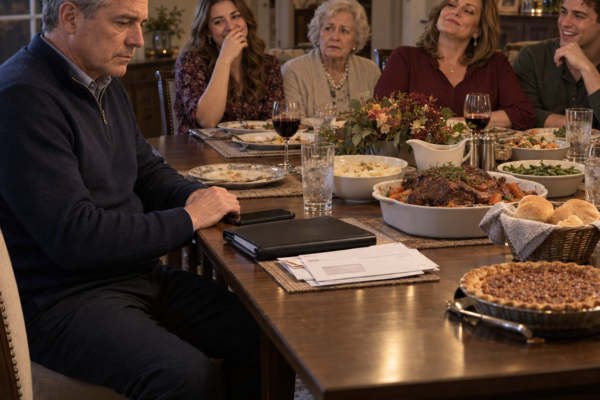
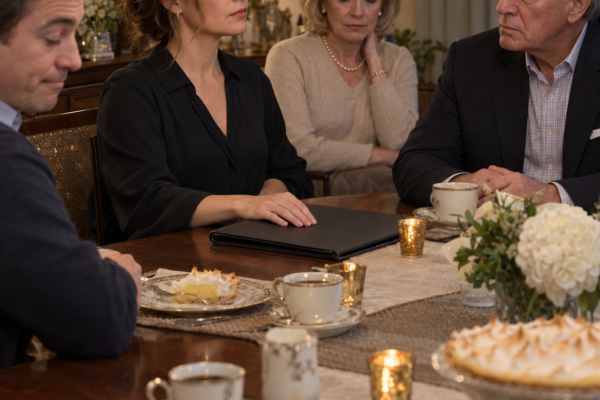
My Parents Spent 32 Years Saying My Older Sister “Needed More Help”—Then Thanksgiving Dinner Turned Into a Family Budget Meeting the Moment They Learned I Had Built a $15 Million Net Worth, and Mom Said Her Mortgage and Business Problems Were Now My Responsibility
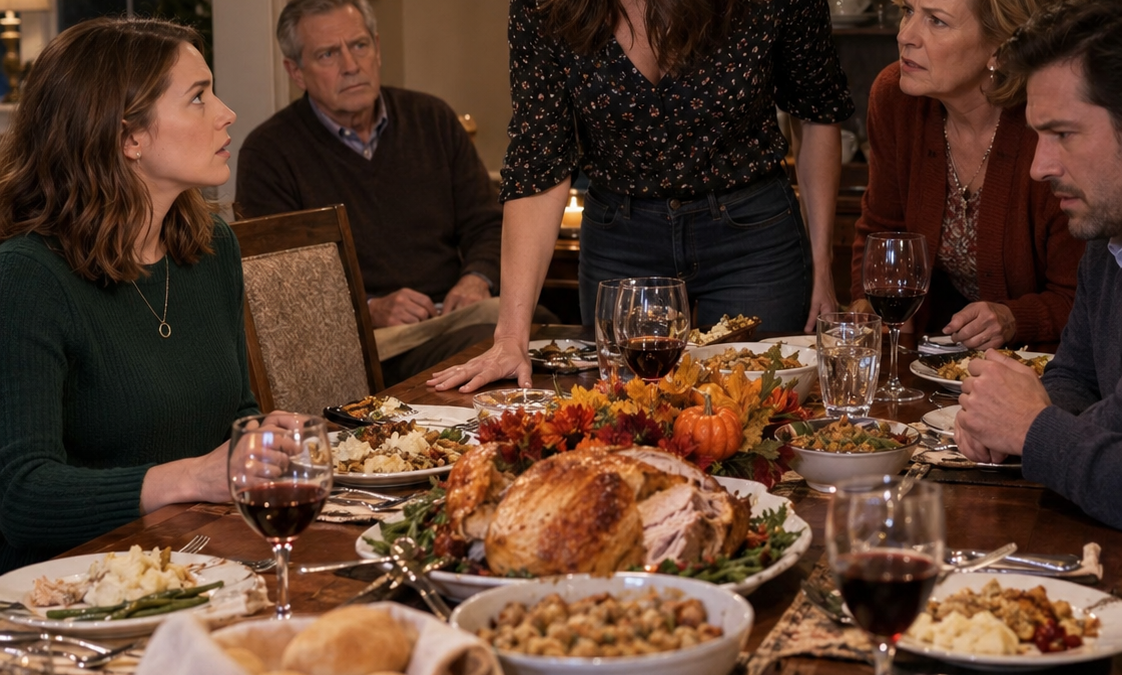
My sister learned I was worth roughly fifteen million dollars between the turkey and the pumpkin pie.
Ten minutes later, my mother had already allocated the first half million.
“Pay off Kendra’s mortgage,” she said. “That should come first.”
Come first.
As though my money had been waiting for a family meeting.
My name is Erin Walsh.
I was thirty-two years old that Thanksgiving, living in Seattle and working for the company that had acquired the small industrial-technology startup I joined straight out of college.
I had not set out to become wealthy.
I certainly had not grown up wealthy.
My parents, Robert and Diane, lived in Naperville, Illinois, in a comfortable house they had purchased before I was born.
We were never poor.
We were also not the kind of family where fifteen million dollars made sense as a future possibility.
Dad worked in insurance.
Mom handled office administration for a dental practice before eventually going part-time.
My older sister Kendra was three years ahead of me.
From the beginning, Kendra was the child whose needs seemed to arrive with more urgency.
She was talented.
Beautiful.
Social.
The kind of teenager adults described as having potential even while she was creating problems everyone else had to clean up.
At sixteen, she totaled Mom’s car backing into a concrete post.
Dad bought her a used Volkswagen two months later because she “needed independence.”
When I turned sixteen, I got permission to use the family minivan whenever Mom didn’t need it.
Kendra attended a private university.
My parents helped with tuition and paid for a small apartment near campus because the dorms made her miserable.
I attended the University of Illinois.
Scholarships covered part.
Loans covered the rest.
I worked in the library and spent summers at a packaging warehouse outside Joliet.
Whenever I complained, Mom smiled.
“You’re my independent one.”
For years, I thought that meant she respected me.
Later I understood the full translation.
Kendra needs help.
Erin will figure it out.
There is a difference between trusting one child’s competence and using that competence as an excuse to invest less in her.
It took me decades to see it.
After graduation, I moved to Seattle.
The startup was called Northline Dynamics.
We built sensor and monitoring systems for large industrial equipment.
The company was small enough that my first desk was a folding table.
I worked in customer implementation.
Then product operations.
Then whatever needed doing.
Startups are good at giving employees impressive titles after asking them to fix the office printer.
I joined partly because the salary was decent and partly because they offered equity.
At twenty-two, equity sounded imaginary.
My father actually laughed when I explained it.
“So instead of paying you real money, they’re giving you pretend money?”
“Also real money, Dad.”
“You know what I mean.”
Kendra thought moving across the country was dramatic.
Mom cried.
Then everyone adjusted.
Years passed.
Northline grew.
Not explosively.
Steadily.
We found customers.
Raised money.
Hired engineers.
Lost customers.
Fixed products.
Almost ran out of money twice.
Then a large industrial corporation acquired us.
The number announced publicly was substantial.
My personal payout was not public.
I paid taxes.
Invested most of the rest.
Worked with an advisor.
Kept working.
I never bought a sports car.
Never purchased some glass mansion overlooking Puget Sound.
For almost two years after the acquisition, I drove the same Volvo I had bought used before anyone knew the deal might happen.
Privacy became easy because my appearance did not change.
My family knew the company had sold.
They assumed I received a nice employee bonus.
I allowed that assumption to stand.
Maybe that was cowardly.
Mostly, I did not want money entering a family system that already had trouble distinguishing generosity from obligation.
Kendra’s life followed another path.
She married Mark at twenty-seven.
My parents contributed heavily to the wedding.
I contributed too.
Kendra and Mark eventually opened a high-end flooring and interior-finish showroom.
The first location did well.
The second did not.
I knew they had business stress.
I did not know the scale.
Nobody asked me for money.
Not yet.
That Thanksgiving was the first holiday in two years when all of us were together.
I flew into Chicago Wednesday afternoon.
Mom hugged me at the door.
Dad complained about airport traffic even though he had not gone to the airport.
Kendra arrived Thursday with Mark and their six-year-old daughter, Lucy.
The day began normally.
Football.
Too much food.
Mom yelling because somebody touched the dinner rolls before guests sat down.
Kendra telling me my sweater looked “very Seattle.”
I told her I had bought it in Chicago.
For several hours, we were almost the family people imagine when they see matching holiday photographs.
After dinner, Mark checked his phone.
He worked with builders and real-estate developers.
Someone from his office had apparently sent him an old article about the Northline acquisition because my name appeared in it.
“Erin.”
I looked up.
“Is this you?”
He turned the screen.
There I was.
Three years younger.
Terrible corporate headshot.
The article described several early employees.
Kendra leaned across.
“You were an early employee?”
“Pretty early.”
“Did you have stock?”
“Yes.”
She stared.
“How much?”
“Enough.”
That should have ended it.
It didn’t.
“How much is enough?”
“Kendra.”
“What? We’re family.”
That phrase.
We’re family.
It can mean I love you.
It can also mean your privacy has expired.
Mom joined.
“Did you do well from the sale?”
“Yes.”
“How well?”
I looked around the table.
Maybe I was tired of hiding it.
Maybe some stupid part of me believed my family would simply be happy.
“After everything, investments included, I’m worth around fifteen million.”
Nobody spoke.
Then Kendra’s wineglass hit the table.
Not broken.
Hard enough to spill.
“Fifteen million dollars?”
Mark stared at her.
“Kendra.”
“You have fifteen million dollars?”
“Approximately.”
“And you never told us?”
Mom looked genuinely offended.
“Erin.”
“What?”
“That is not something you hide from your parents.”
Dad remained quiet.
His expression was harder to read.
Kendra asked:
“How long?”
“Since the acquisition, more or less.”
She gave a short laugh.
“So while we’ve been struggling, you’ve been sitting on fifteen million dollars.”
That was the first moment everything changed.
Not congratulations.
Not surprise.
Comparison.
“Our mortgage jumped after the escrow change,” she said.
“I didn’t know.”
“You know the second showroom is struggling.”
“I knew it wasn’t doing well.”
“We have employees.”
Mark said:
“Kendra, stop.”
She ignored him.
“You could fix everything.”
Mom nodded.
“You could.”
I looked at her.
“Could what?”
“Help them.”
“How?”
“Pay down the house. Give the business room to breathe.”
The speed amazed me.
Nobody had asked whether I wanted to invest.
Nobody had asked whether the business was viable.
The fact that I possessed money became the argument for spending it.
Dad finally said:
“It wouldn’t materially affect your life.”
That was true.
Paying Kendra’s mortgage probably would not change what groceries I bought next week.
That did not make it wise.
Or owed.
“That isn’t the point.”
Mom frowned.
“What is the point?”
“That my money isn’t a family emergency fund.”
Kendra leaned back.
“Wow.”
“What?”
“I cannot believe you can say that after everything Mom and Dad did for you.”
I looked toward my parents.
Mom immediately started talking.
“We fed you. We kept a roof over you. We helped with school.”
I laughed before I could stop myself.
Mom’s face hardened.
“You think that is funny?”
“I think listing food you bought your child at eight years old as evidence she owes her sister’s mortgage at thirty-two is strange.”
“Erin.”
Dad’s warning voice.
I ignored it.
“What exactly do I owe?”
“Nobody said owe,” Dad replied.
Mom looked at him.
Then said:
“Well, actually, family should want to help family.”
Different word.
Same invoice.
Kendra said:
“You always act like you did everything alone.”
“I’ve never said that.”
“You had advantages too.”
“Of course.”
“Grandma paid for your college.”
The room changed.
I remember it physically.
Mark stopped moving.
Dad’s eyes snapped toward Kendra.
Mom lowered her fork.
I looked at my sister.
“What?”
Kendra realized immediately she had said something she was not supposed to say.
“Nothing.”
“No. What money from Grandma?”
Dad spoke.
“She’s confused.”
Kendra looked at him.
“I’m not confused.”
Mom said:
“Kendra.”
I knew that tone.
Stop.
I leaned forward.
“I graduated with seventy-two thousand dollars in student loans.”
Nobody answered.
“I worked twenty hours a week.”
Mom stared at the table.
“What money?”
Kendra looked miserable now.
Finally she said:
“Grandma had an education account.”
“For me?”
“She had one for both of us.”
My heart began beating harder.
Our grandmother, Rose, had died when I was nineteen.
I remembered her talking about college.
I remembered birthday checks.
I remembered Mom telling me after Grandma’s death that there was not much left after medical expenses and final bills.
“How much?”
Dad said:
“This is not relevant.”
“That means it’s extremely relevant.”
“Erin.”
“How much?”
Kendra whispered:
“About sixty thousand each.”
I stared at her.
“Each?”
Mom stood.
“I’m getting coffee.”
“Sit down.”
I had never spoken to her that way.
She did not sit.
Dad said:
“The money was never legally promised to you.”
That sentence told me the next part before anyone explained it.
“What happened to mine?”
Dad rubbed his forehead.
“You had scholarships.”
“Not enough.”
“We were dealing with a lot.”
“What happened to it?”
Kendra started crying.
Not loudly.
Mark looked at her.
“What is she talking about?”
That question told me he didn’t know either.
Dad answered.
“Some of the money was redirected.”
“To where?”
Silence.
Kendra finally said:
“My school.”
I looked at her.
“You already had an account.”
“My tuition went up.”
Dad added:
“She lost some scholarship funding.”
Kendra’s face reddened.
“I didn’t lose it.”
Dad looked at her.
Not now.
She kept going.
“I changed programs. The new one cost more.”
“How much of my grandmother’s money went to you?”
Kendra wiped beneath one eye.
“I don’t know.”
Dad said:
“Most of it.”
The words were quiet.
I felt strangely calm.
“What did you tell Grandma?”
Mom turned.
“Do not talk about your grandmother like we stole from her.”
“I’m asking what she intended.”
“She wanted both girls educated.”
“I borrowed seventy-two thousand dollars while Kendra used both accounts.”
“You chose a cheaper school,” Mom said.
There it was again.
I had been responsible.
Therefore, I needed less.
Kendra had chosen something expensive.
Therefore, her need became greater.
“What did you tell me?”
Mom folded her arms.
“You were doing fine.”
“That’s not an answer.”
Dad looked at me.
“We told you the family couldn’t contribute as much.”
“You told me Grandma’s money was mostly gone.”
No one denied it.
I remember one particular semester.
Junior year.
My loan offer had changed.
I called Dad crying because I was short nearly four thousand dollars.
He told me money was tight.
I picked up extra warehouse shifts over winter break.
At the same time, Kendra was studying abroad.
I had believed she received scholarships.
Now I wondered how much of my grandmother’s money paid for Florence.
Mark stood.
“I need some air.”
Kendra looked at him.
“Mark.”
He walked toward the back door.
Their marriage was not my responsibility.
I did not enjoy watching it strain.
That surprised me.
I thought years of resentment toward Kendra would make the moment satisfying.
It didn’t.
Mostly I felt tired.
Mom returned to the argument that had started everything.
“You have fifteen million dollars now.”
I actually smiled.
“What does that have to do with what happened twenty years ago?”
“Exactly. You’re fine.”
There it was.
The philosophy of my childhood in two words.
You’re fine.
If I survived something, it ceased to count.
If I succeeded after receiving less, the less became justified retroactively.
“You think because I ended up wealthy, what you did doesn’t matter.”
Dad said:
“We made the decision we thought was best at the time.”
“For Kendra.”
“For the family.”
“No.”
I shook my head.
“For Kendra.”
Mom looked furious.
“You have always resented your sister.”
“I spent most of my life trying not to.”
Kendra stood too.
“I didn’t ask them to do it.”
I looked at her.
“Did you know?”
She hesitated.
That was enough.
“How old were you?”
“Twenty-two.”
“And you never told me.”
“What was I supposed to say?”
I almost laughed.
“How about, ‘Hey Erin, some of the money Grandma put aside for you is paying my tuition’?”
“You would have hated me.”
“I might have.”
She flinched.
“But at least I would have hated you for something true.”
Nobody spoke for a while.
Lucy came in from the family room asking for dessert.
Everything stopped.
Kendra wiped her face.
Mom became Grandma again.
We served pumpkin pie.
That was one of the strangest parts of the night.
Families can detonate financially and emotionally, then cut pie because a six-year-old wants whipped cream.
I stayed until Lucy went to bed upstairs.
Then I left.
Mom followed me into the driveway.
“You’re really going?”
“Yes.”
“On Thanksgiving?”
“Yes.”
Her eyes filled.
That still worked on me.
Maybe always would.
“Please don’t make permanent decisions tonight.”
I looked at her.
“That’s interesting advice.”
She understood.
I drove to a hotel near the airport.
The next morning, I called my aunt Marianne, Mom’s younger sister.
I asked about Grandma Rose.
There was a long silence.
Then:
“You finally found out.”
Not:
What are you talking about?
She knew.
Marianne explained that Grandma had set aside equal investment accounts for both granddaughters years earlier.
Not formal trusts.
Accounts managed with my parents’ help.
Grandma’s intention had been simple.
Education.
Kendra’s original money was used first.
When she changed universities and extended her education, costs rose.
My parents began using money earmarked for me.
Grandma was still alive then.
“Did she know?”
“I don’t think she understood how much.”
That answer mattered.
Not a dramatic theft.
Something murkier.
My parents had gradually treated intent as flexible because one daughter had immediate expenses and the other was still doing well.
Then Grandma died.
Nobody corrected it.
“Why didn’t you tell me?”
Marianne sounded ashamed.
“Your mother said it would only create resentment and that you had scholarships.”
I sat on the hotel bed.
Everyone had been protecting family peace.
By keeping one member of the family uninformed.
That pattern felt suddenly familiar.
I did not call an attorney.
I did not demand sixty thousand dollars plus interest.
I had no interest in turning my grandmother’s memory into litigation over an informal arrangement from more than a decade earlier.
The money itself was no longer the point.
The story was.
For years, my parents told themselves Kendra received more because she needed more.
They never asked what repeatedly receiving less taught me.
Work harder.
Ask less.
Do not expect rescue.
Those lessons helped build the adult I became.
They also left damage.
Being capable did not mean I needed nothing.
It meant I had learned not to ask people who had already shown me the answer.
On Saturday, Dad called.
“Can we talk?”
“We are talking.”
“I mean as a family.”
I laughed softly.
“That phrase is doing a lot of work lately.”
He sighed.
“Kendra and Mark are in a real problem.”
“I know.”
“The second showroom could close.”
“Then they may need to close it.”
“That affects employees.”
“Yes.”
“They owe almost three hundred thousand on business credit.”
I did not know that.
“How much do you want?”
He paused.
I had surprised him.
“Maybe five hundred thousand would stabilize everything.”
There it was.
A number.
Already calculated.
“Whose plan is that?”
“Mine.”
“Does Mark agree?”
Another pause.
“Not completely.”
“So before anyone has determined whether the business can survive, you want me to put half a million dollars into it.”
“I’m asking you to consider helping your sister.”
“No.”
He became frustrated.
“You haven’t even reviewed anything.”
“I don’t invest because someone shares my last name.”
“You can afford it.”
“That is not an investment thesis.”
“I’m your father.”
“I know.”
He went quiet.
Then said something that changed the conversation.
“I worry about her.”
“I know.”
“You never seemed to need me the same way.”
I sat still.
There was no manipulation in his voice this time.
Just truth.
“That’s because I stopped asking.”
Dad said nothing.
“You think I came out of the womb independent?”
“No.”
“I learned it.”
He breathed slowly.
“I suppose you did.”
That was the first useful conversation we had.
Not apology.
Recognition.
Mom took longer.
She left voicemails.
Some angry.
Some tearful.
One said:
“You are letting money destroy this family.”
I saved that one because the irony was almost impressive.
My money had not created the system.
It simply made the system impossible to ignore.
Kendra called five days later.
“I’m not asking you to pay my mortgage.”
“Okay.”
“Dad is.”
“I know.”
“And I’m not asking you to save the showroom.”
“That’s good.”
She became irritated.
“You don’t have to sound so pleased.”
“I’m not pleased.”
“Then what do you want from me?”
I thought about that.
“For you to stop acting like Mom and Dad treating us differently was something that only happened to me.”
Silence.
“What does that mean?”
“They taught you somebody would always fix it.”
She did not respond.
“They taught me nobody would.”
“That’s not fair.”
“No. It wasn’t.”
She hung up.
We did not speak for almost three months.
Meanwhile, the second showroom closed.
Mark and Kendra negotiated with lenders.
They sold inventory.
Let the lease go.
The original location remained open.
Their house was not foreclosed.
Nobody became homeless.
Nobody lost everything.
The catastrophe everyone insisted only my money could prevent turned into a painful business contraction.
A normal adult consequence.
I was glad they survived it.
I was also glad I had not put half a million dollars into avoiding it.
My relationship with my parents changed.
I stopped giving them automatic access to details of my financial life.
Not as punishment.
Because financial privacy had become necessary.
Mom hated that.
Dad gradually accepted it.
Seven months after Thanksgiving, he called me one evening.
“I found something.”
“What?”
“A letter from your grandmother.”
My first instinct was suspicion.
He must have heard it.
“It isn’t some secret will.”
I laughed despite myself.
“Okay.”
“She wrote it when Kendra changed schools.”
He mailed me a copy.
Grandma’s handwriting was shaky near the end.
The letter was addressed to my parents.
Most of it was ordinary.
Then:
Please make sure Erin has the same chance. She asks for less, but that does not mean she should receive less.
I read that line several times.
There was no legal instruction.
No revenge mechanism.
Just a grandmother who had seen me more clearly than the adults making decisions.
Dad called a week later.
“Did you read it?”
“Yes.”
“I didn’t remember that line.”
“I believe you.”
That surprised him.
“I think we told ourselves you were okay.”
“I was.”
“That’s the problem, isn’t it?”
“Yes.”
He apologized.
Not beautifully.
Not all at once.
But specifically.
For the college money.
For turning competence into justification.
For discussing my wealth as though family membership created a claim.
Mom’s apology was harder.
She kept returning to intention.
“We were trying to help both of you.”
Eventually I told her:
“I’m not asking you to confess that you loved Kendra more.”
She started crying.
“I know you loved me.”
“Then what are you asking?”
“For you to stop using love as proof that the outcome was fair.”
That finally reached her.
We became less close for a while.
That was the cost.
Not every honest conversation produces immediate warmth.
Sometimes a family improves only after people stop forcing closeness before trust has caught up.
Kendra and I stayed distant almost a year.
Then she came to Seattle for a trade conference.
She texted:
Coffee? No financial requests. Promise.
I laughed.
We met.
She looked tired.
Less polished.
More real.
The business was smaller.
Mark was consulting again.
They had refinanced their mortgage themselves.
“We’re okay,” she said.
“I’m glad.”
She stared into her coffee.
“I think Mom and Dad made me afraid of ever being the one who didn’t get rescued.”
That was a sentence I had not expected.
“I thought you liked being rescued.”
“I did.”
She looked at me.
“That doesn’t mean it was good for me.”
We sat quietly.
Then she said:
“I knew some of Grandma’s money came to me. I didn’t know how much until Thanksgiving.”
“I believe that.”
“I should have told you what I knew.”
“Yes.”
“I’m sorry.”
I accepted it.
We did not become best friends afterward.
That would be false.
But we became sisters without the old scoreboard running constantly in the background.
Two Thanksgivings later, I came home again.
Same dining room.
Same table.
Mom still overcooked the green beans.
Kendra still brought wine too expensive for anyone to admit they did not like.
Nobody discussed my net worth.
Halfway through dinner, Dad asked how work was going.
Just work.
Not the stock price.
Not investments.
Not who needed what.
I told him.
Kendra’s daughter Lucy asked whether I was “actually rich.”
Everyone froze.
I laughed.
“What counts as rich?”
She thought.
“Can you buy a horse?”
“Probably.”
Her eyes widened.
“Then yes.”
Kendra covered her face.
The table laughed.
That was all the money became that night.
A ridiculous horse question from a child.
Exactly as important as it deserved to be.
I never paid off Kendra’s mortgage.
Never rescued her business.
Never reimbursed myself for the education money.
Those choices sometimes confuse people.
They expect a story about fifteen million dollars to end with a bigger financial move.
It didn’t.
The important thing I bought was nothing.
I simply stopped letting my family spend my success emotionally before I had chosen what it meant to me.
Being the “easy child” had shaped my whole life.
It made me resourceful.
Disciplined.
Good at solving problems.
It also taught everyone around me that I would absorb unfairness quietly because I usually survived it.
I did survive.
I did more than survive.
But success does not turn old unfairness into fair treatment.
And having enough does not create a debt to everyone who has less.
My family knows how much money I have now.
That secret is gone.
Something better replaced it.
They finally know it is mine.