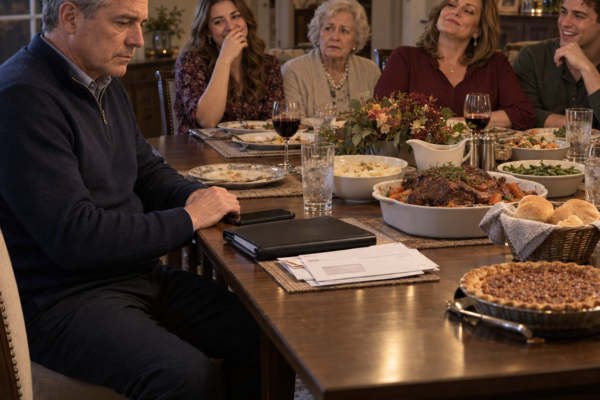
For Three Years I Sent My Son $550 Every Friday So His Family Could Stay Afloat—Then on My 65th Birthday He Skipped the Dinner We Planned a Month Earlier and Told Me, “Sarah Says We Don’t Count You as Family Anyway”
For three years, every Friday morning started with $550 leaving my bank account.
The transfer usually cleared before I finished my first cup of coffee.
Recipient: David Mercer.
My son.
The arrangement began during a Sunday dinner when David admitted he and Sarah were falling behind.
He was thirty-seven at the time.
Two children.
A mortgage.
A car payment.
Sarah had left her job at an insurance office after they realized daycare for Noah and Sophie would cost nearly as much as she brought home.
David worked in commercial flooring sales.
Good years paid well.
Bad years didn’t.
That year had been bad.
“Just until things settle down,” he told me.
My name is Elaine Mercer.
I was sixty-two then.
Frank, my husband of thirty-nine years, had died the previous year after a short battle with pancreatic cancer.
I was still learning how loud a quiet house could become.
I had retired from the county payroll office.
Our home outside Dayton, Ohio, was paid off.
Frank’s survivor pension covered my ordinary expenses.
I had some savings.
Not fortune money.
Enough.
David was my only child.
When he said the mortgage was stretching them, I did what I had spent most of my adult life doing.
I calculated.
Their shortage was roughly two thousand dollars a month.
I suggested $500 a week temporarily.
David said $550 would make things “comfortable enough that we can breathe.”
I remember that exact phrase.
Comfortable enough to breathe.
So Friday became $550.
At first, he called after almost every transfer.
“Thanks, Mom.”
“Really, this helps.”
“We’re going to pay you back someday.”
I always said the same thing.
“Take care of the kids.”
I never intended the money as a loan.
I also never intended it to become permanent.
That distinction disappeared slowly.
Six months became one year.
One year became two.
By the second Christmas, nobody referred to the payments anymore.
They simply happened.
David started planning around them.
When I once mentioned that I might reduce the amount because my property taxes had increased, he became anxious.
“Could you wait until after summer? Noah has camp.”
I waited.
When the air conditioner in my house began making a grinding sound, I paid to repair it instead of replacing it.
When my sister Margaret invited me to Savannah for a long weekend, I declined.
Money wasn’t the only reason.
But it mattered.
Sarah drove a newer SUV than I did.
David upgraded his truck.
I noticed.
Then immediately felt guilty for noticing.
Adults are allowed to buy things.
Parents should not hand over money and then audit every restaurant receipt.
That was what I told myself.
So I kept sending it.
The children made everything easier to justify.
Noah was nine.
Sophie eleven.
Noah loved baseball and never remembered where he left his glove.
Sophie read constantly and had the unnerving habit of listening to adults when we assumed she wasn’t.
They spent some weekends with me.
Less often as they got older.
Sarah said their schedules were becoming difficult.
I accepted that too.
There are many ways to disappear from someone’s life while still appearing on their bank statement.
I understood that on my sixty-fifth birthday.
The dinner had been scheduled for a month.
David confirmed twice.
I made pot roast because it had been his favorite since middle school.
Sophie liked roasted baby potatoes.
Noah objected to vegetables on moral grounds, according to him, so I prepared broccoli knowing he would complain.
I baked a vanilla cake from scratch.
Frank used to bake my birthday cakes.
Badly.
The first year after he died, David bought one from a grocery store.
I appreciated the effort.
By sixty-five, I decided I could bake my own.
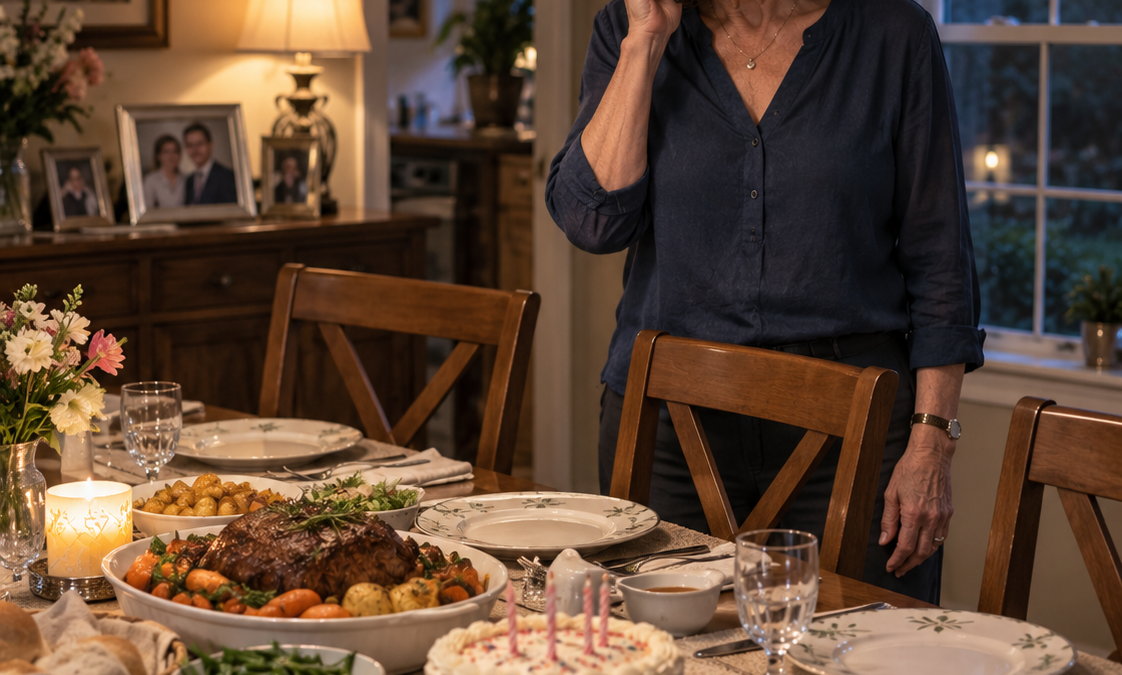
At six-fifteen, I set the table.
Five places.
Mine.
David.
Sarah.
Noah.
Sophie.
At six-thirty, nobody had arrived.
At seven, still nobody.
I texted.
No answer.
By seven-thirty, the food had spent too long warming and too little time being eaten.
I called.
David picked up on the fourth ring.
Television noise.
Laughter.
Normal life happening somewhere I had expected to be.
“Hey, Mom.”
“Where are you?”
Silence.
Then:
“Oh.”
That hurt more than if he had invented an excuse immediately.
He had forgotten.
“We agreed on tonight.”
“Yeah. I know.”
“No, you didn’t.”
“Mom.”
“What?”
“Don’t do this.”
I looked at the cake.
“Do what?”
“Turn it into a guilt thing.”
“It’s my birthday, David.”
“I know that.”
“You were supposed to be here.”
“Things changed.”
“What changed?”
Sarah said something in the background.
I couldn’t hear the words.
David answered her, then returned to me already sounding irritated.
“Honestly, Sarah says we don’t count you as family anyway.”
I thought exhaustion or age had caused me to misunderstand.
“What?”
“You’re always keeping score.”
“About what?”
“Money. Holidays. Visits. Who called who.”
I looked around my dining room.
“I asked why you skipped dinner.”
“There. Exactly.”
“What exactly?”
“You do something for people, then everything comes with expectations.”
That sentence hit a place in me I had spent years protecting.
The $550.
School clothes I sometimes bought.
Groceries I dropped off during rough months.
Emergency dental work for Noah.
Not because David demanded every one of those things.
Because I offered.
Because I loved them.
Apparently, somewhere along the way, love had been translated into leverage.
“David, I expected you tonight because you said you were coming.”
He sighed.
“We’ll call next week.”
Then the call ended.
No happy birthday.
No apology.
Just silence.
I stood there for several minutes.
Eventually I put away the food.
Wrapped the cake.
Washed one plate even though nobody had eaten from it because I needed something ordinary to do.
Then I carried my laptop to the table.
The Friday transfer was scheduled for the next morning.
I opened it.
$550.
Recurring.
No end date.
I did not cancel it immediately.
That surprises people when I tell this story.
Maybe they expect the satisfying click.
A mother insulted.
Money stopped.
Son panics.
Life is rarely that clean when grandchildren are involved.
I wanted to know what I was actually changing before I changed it.
So I opened the transfer history.
More than $85,000 over three years.
I knew the total would be large.
Seeing it still made my stomach tighten.
Every transfer had the same memo because I had created the template years earlier.
Help.
My phone buzzed.
Sophie.
Grandma are you mad at us?
I answered immediately.
Never at you. Why?
Her reply took longer.
Dad said we couldn’t come because you get weird when Grandpa’s money comes up.
I stared at the words.
Grandpa’s money.
Frank had been dead four years.
I typed carefully.
What money does Dad mean?
Sophie replied:
The money Grandpa left Dad every week.
I sat back.
Frank had not left David a weekly inheritance.
There was no trust.
No annuity.
No hidden provision.
Frank’s will had been simple.
Everything passed to me.
David knew that.
He had been in the attorney’s office.
I called Margaret.
My sister answered cheerfully.
“Birthday girl.”
I said:
“Did Frank leave David money I somehow forgot about?”
Silence.
Margaret knew my tone.
“What happened?”
I told her.
Not everything.
Enough.
She said:
“Elaine.”
“I know.”
“No, I don’t think you do. How long has he been telling them that?”
That was the question.
I texted Sophie only:
Grandpa loved your dad very much. We’ll talk another time. None of this is your worry.
Then I closed the conversation.
Children should not become investigators inside adult lies.
The next morning, I called David.
He did not answer.
I sent:
We need to talk in person. No children.
He called within five minutes.
“What now?”
“Have you told Sarah the $550 comes from your father?”
Pause.
Tiny.
But enough.
“Mom.”
“Answer.”
“It’s complicated.”
“No. It’s either true or false.”
He became defensive.
“I never said Dad personally sends it.”
“He’s dead, David.”
“You know what I mean.”
“No.”
His voice hardened.
“I told Sarah Dad always meant for me to be taken care of.”
That was not the same thing.
“Did you tell her the weekly money is from me?”
Another silence.
“She knows it comes through your account.”
Through.
Like I was a bank administering someone else’s estate.
“Does she know it is my retirement income?”
“I don’t discuss your finances with my wife.”
I almost laughed.
“You discuss them enough to take $550 every Friday.”
His tone changed.
“Are you canceling it?”
There was the first clear fear in the conversation.
Not:
Why are you hurt?
Not:
I’m sorry Sophie was told something untrue.
Are you canceling it?
“I haven’t decided.”
“You can’t just pull that out overnight.”
“I can.”
“The mortgage—”
“You told me last night my support came with expectations.”
“It does.”
“Then I should remove the confusion.”
“You’re proving Sarah right.”
That sentence almost worked.
Old Elaine would have immediately tried to prove she was generous.
Instead I asked:
“What does Sarah believe I’m entitled to expect from my son?”
David said nothing.
I ended the call.
Sarah phoned an hour later.
I considered ignoring it.
Then answered.
She skipped hello.
“Are you really threatening the kids because you’re mad about a birthday?”
“No.”
“David says you’re stopping the money.”
“I said we are reviewing it.”
“Because we missed one dinner.”
“Sarah, where do you think that money comes from?”
“David’s dad.”
There it was.
Not even hesitation.
“What exactly did David tell you?”
“He said Frank set things up before he died so David would always have something.”
I closed my eyes.
Frank had been sick for four months between diagnosis and death.
Most of that time, he had been worried about leaving me alone.
He never created a weekly income stream for David.
“Sarah, that is not true.”
Silence.
“What do you mean?”
“I mean every Friday for three years, I have voluntarily transferred $550 from my own account because David told me your household needed help.”
She became quiet enough that I could hear a clock somewhere behind her.
“He said it was basically his inheritance.”
“No.”
“Are you sure?”
I almost admired the question.
“Yes, Sarah. I handled my husband’s estate.”
Another pause.
Then:
“Why would he tell me that?”
“You need to ask him.”
Her next words surprised me.
“Did you really give him over eighty thousand dollars?”
I had not told her the total.
She was calculating.
“Yes.”
“Oh my God.”
For the first time, anger in her voice was not directed at me.
Then she said something equally important.
“I said we don’t count you as family because David said you use money to control him.”
I stayed silent.
She continued.
“He said every holiday invitation turns into ‘after everything Mom does for us.’”
“I have never said that.”
“I’m telling you what he tells me.”
Suddenly several years rearranged themselves.
Why Sarah became guarded around me.
Why visits became less frequent.
Why she once reacted strangely when I offered to pay for Sophie’s summer reading program.
David had been managing two stories.
To me:
His family was struggling, grateful and temporarily dependent.
To Sarah:
His mother controlled money that really belonged to him and attached emotional obligations to it.
The lie protected his pride in both directions.
He did not have to tell his wife they were living partly on his widowed mother’s retirement income.
And he did not have to tell me his wife resented me because of the story he had created.
I said:
“Sarah, I’m not discussing David with you behind his back.”
“That seems generous considering what he did.”
“This conversation has already gone far enough.”
Before hanging up, she said:
“Elaine?”
“Yes?”
“I didn’t know.”
I believed her.
That didn’t erase what she had said.
But it changed what it meant.
I canceled the recurring transfer that afternoon.
Not as punishment.
Because an arrangement built on a lie could not continue automatically.
I sent David one message.
The weekly transfer has ended. I will continue anything I choose to do directly for Noah and Sophie. Your household budget is now yours and Sarah’s responsibility.
His response came eleven minutes later.
You are destroying us over one argument.
I answered:
No. I am ending an indefinite subsidy we never agreed would be permanent.
Then I stopped responding.
The next weeks were ugly.
David called Margaret.
He called two cousins.
He told them I had “cut off the kids.”
Margaret corrected him immediately.
One cousin stayed out of it.
Another phoned me and said:
“Maybe family shouldn’t keep score.”
I replied:
“Then nobody should have trouble with the payments stopping.”
He had no answer.
I did not publish bank statements.
Did not send group emails.
Did not expose my son publicly.
I also did not restore the transfer to make the discomfort disappear.
That was new for me.
Sarah went back to work part-time three months later.
David sold his truck and bought a used sedan.
They canceled a country-club fitness membership I had not known they had.
The children stayed in the same house.
Nobody starved.
Nobody became homeless.
That part mattered.
I had spent three years assuming my money was the thin wall preventing catastrophe.
It wasn’t.
It was preventing adjustment.
David had built a lifestyle around assistance because assistance was easier than changing the lifestyle.
That was partly his responsibility.
Partly mine.
I had never asked what the exit plan was.
I had made temporary help painless enough to become permanent.
The hardest consequence was not financial.
David stopped bringing the children to see me.
That lasted six weeks.
I did not retaliate.
No money through the kids.
No gifts designed to force contact.
I mailed Sophie a birthday card.
No check.
Just a card.
Then one Saturday my doorbell rang.
Sarah stood there with Noah and Sophie.
David was not with them.
Sophie hugged me first.
Sarah looked uncomfortable.
“I told him I’m not using the kids for this.”
I stepped aside.
“Come in.”
We did not become best friends.
That would be dishonest.
But Sarah and I slowly learned how much of our conflict had been translated through one man who was scared of disappointing both of us.
She apologized for saying I was not family.
I accepted it.
Then told her:
“I also need you to know that being family does not mean I’m going back to financing your household.”
“I know.”
She did.
That mattered.
David took longer.
Almost eight months.
The first time he came to my house alone, he looked tired.
He stood in the kitchen where the untouched birthday dinner had been months earlier.
“I’m sorry.”
I waited.
“For missing the birthday?”
“For all of it.”
Still, I waited.
Specific apologies matter.
He understood.
“I lied to Sarah because I was embarrassed.”
“About needing help?”
“Yes.”
He sat down.
“At first I told her you were helping temporarily. Then it kept going. Every time she asked when we were going to stop depending on you, I felt like a failure.”
“So you made it Dad’s money.”
He nodded.
“If it was inheritance, then I wasn’t taking money from my mother.”
I understood the logic.
I hated it.
“And why tell her I controlled you?”
His face changed.
“Because when you asked us to come for dinner or Christmas, I felt guilty if I didn’t want to.”
“So instead of saying no, you made me unreasonable for asking.”
“Yes.”
There was no clever defense afterward.
No blaming Sarah.
No speech about stress.
Just yes.
That was when I knew we might still have something to rebuild.
“What did you mean when you said you didn’t count me as family?”
He rubbed his palms together.
“I wanted to hurt you.”
Simple.
Ugly.
Honest.
“Why?”
“Because you were asking me to face something I didn’t want to face.”
I looked at him.
“What?”
“That you had spent three years supporting my family, and I couldn’t even remember your birthday dinner.”
The kitchen stayed quiet.
Eventually, I said:
“That part worked.”
He looked confused.
“You hurt me.”
His eyes filled.
I let them.
Parents sometimes love their children by relieving pain too quickly.
I had done enough of that.
We did not fix everything that afternoon.
I did not restart the weekly payments.
David did not ask.
That mattered more than another apology.
The following year, my sixty-sixth birthday fell on a Wednesday.
I made no dinner plans.
Margaret and I had booked lunch.
Around five-thirty, somebody knocked.
Noah stood on my porch holding a crooked homemade cake.
Sophie was behind him with paper plates.
Sarah carried a casserole.
David stood at the back.
“Are we early?” he asked.
“You weren’t invited.”
His expression fell.
Then I smiled.
“That means you’re definitely early.”
He laughed.
Carefully.
They came inside.
The cake leaned badly to the left.
Noah blamed the frosting.
Sophie blamed Noah.
Nobody talked about money.
There were no envelopes.
No checks.
No weekly transfer arriving the next morning.
After dinner, David helped clear the plates.
At the sink, he said:
“We’re okay now.”
I looked at him.
“Financially?”
“Not comfortable.”
That word.
The one he had used three years earlier.
“But okay.”
I nodded.
“Good.”
He dried a plate.
Then added:
“I think comfortable made me stupid.”
I laughed.
“That’s an expensive lesson.”
“Yeah.”
He looked at me.
“For both of us.”
He was right.
I had spent more than eighty-five thousand dollars learning that generosity and belonging were not the same transaction.
I do not regret every dollar.
The money fed my grandchildren.
Paid mortgage payments.
Bought groceries.
Reduced stress during years when two children were very small.
What I regret was allowing assistance to continue without ever asking whether the relationship around it was still healthy.
David had mistaken support for entitlement.
I had mistaken being needed for being close.
Both of us had reasons.
Neither of us had an excuse.
I still help my grandchildren sometimes.
Sophie needed a laptop for high school.
I bought one.
Noah’s baseball team traveled to a tournament Sarah and David genuinely could not afford.
I paid part of the fee.
Directly.
Clearly.
Without recurring transfers.
Without invisible obligations.
And when I invite them for dinner, David sometimes says no.
That is allowed now.
The difference is that he says it honestly.
“Mom, we already have plans.”
Fine.
No guilt.
No money underneath the conversation.
No secret accounting of affection.
My sixty-fifth birthday dinner taught me something I should have learned much earlier.
Money can support a family.
It cannot make one.
If somebody accepts your help while teaching themselves to resent your presence, sending more will not bring you closer.
Sometimes love looks like giving.
Sometimes it looks like stopping.
The important part is knowing which one you are actually doing.