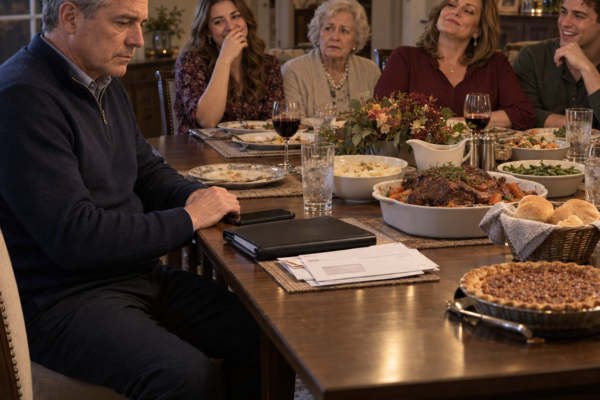
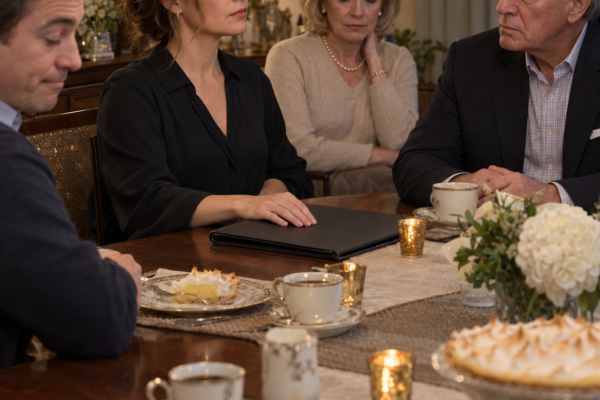
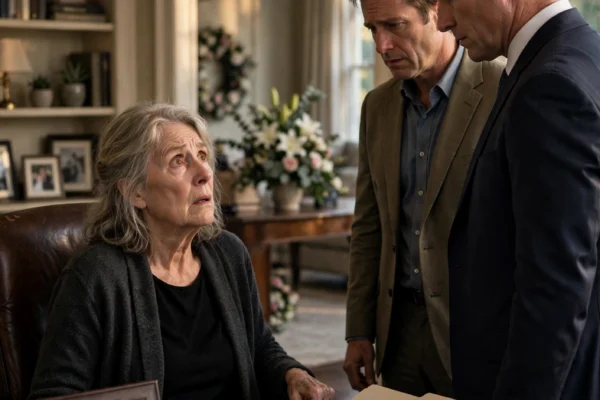
At the Final Walkthrough of the $745,000 Home I Was Helping My Son Buy, My 8-Year-Old Grandson Blocked the Door and Said His Mom Didn’t Want “People Like Grandma” Inside—While My Son Stood Behind Him and Never Once Corrected Him.

My grandson was the person who stopped me from entering the house.
“Grandma, you have to wait outside.”
I thought Noah was playing.
He was eight years old and had spent most of his life treating doors as optional boundaries.
He opened bathroom doors without knocking.
Walked into my bedroom at six in the morning.
Once climbed through my kitchen window because I didn’t hear the doorbell fast enough.
So when he stood in the doorway of the new house with both hands on the frame, I smiled.
“Why?”
His face became serious.
“Mom said this house is for polished people.”
I waited.
He added:
“Not people like Grandma.”
Nobody behind him moved.
That was how I learned what my family said about me when they assumed I wasn’t listening.
My name is Marlene Brooks.
I was sixty-four at the time, retired after thirty-seven years working in payroll and employee benefits for the city of Indianapolis.
I had never considered myself impressive.
Reliable, yes.
Organized.
Good with numbers.
The person coworkers came to when a paycheck was wrong or health coverage suddenly disappeared from a system.
But not impressive.
My husband Paul used to tell people I could detect a missing twelve cents from fifty feet away.
We had been married thirty-four years when he died.
Cancer.
Fast enough that neither of us adjusted.
Slow enough that we had time to organize things we didn’t want to organize.
Paul had worked as an electrical contractor.
We made ordinary salaries.
We also lived below them.
No luxury cars.
No giant house.
No annual overseas trips.
We saved.
Invested.
Paid our mortgage early.
When Paul died, I owned our ranch house outright and had retirement accounts we had built together.
I was not wealthy in the way my daughter-in-law’s parents were wealthy.
I was secure.
That was more than I had expected from life.
Our only child, Michael, was thirty-eight.
He and Vanessa had been married eleven years.
Noah was eight.
Their daughter Claire was five.
Michael worked in medical sales.
Vanessa handled marketing for a regional architecture company.
Together, they earned good money.
They also spent good money.
Again, not my business.
At least, I tried to make it not my business.
Vanessa’s parents lived differently.
Her father, Curtis, had sold a medical-supply company in his fifties.
Her mother, Diane, served on arts boards, charity committees and whatever other organizations required catered lunches and name badges.
Their home had a gate.
Mine had a screen door that sometimes stuck in August.
I liked Curtis.
He was direct.
Diane and I had less in common, but we were polite.
The tension came mostly through Vanessa.
She seemed embarrassed by anything ordinary.
My reusable grocery bags.
My Toyota.
The fact that I still used the same CorningWare dishes from 1993.
Once she suggested buying me “something nicer” for Christmas because my handbag was “very practical.”
I said practical was why I bought it.
She laughed.
I did not realize she thought I was joking.
Michael used to defend me.
Then, slowly, he stopped.
That is how these things happen.
Not with a giant betrayal first.
With tiny silences.
A joke about my neighborhood.
Silence.
Vanessa calling my dining set “vintage, but not in the good way.”
Silence.
Her suggesting I should change before one of their parties because I looked “too comfortable.”
Silence.
Each moment was too small to demand a family summit.
Together they created a rule.
Mom could be loved.
Mom could be useful.
Mom did not belong in rooms where appearance mattered.
The house began with a phone call.
Michael and Vanessa had been looking for almost a year.
Their current home was fine.
Three bedrooms.
Good neighborhood.
But Noah was moving toward middle school, and they wanted a district with stronger rankings.
Vanessa also wanted more space to entertain clients.
The house they loved was listed at $745,000.
I knew immediately it was above their comfortable range.
Michael knew too.
“We can make the payment,” he told me.
“What about the down payment?”
“We’d be thin.”
I listened.
Did not offer.
That surprised him.
A week later, he brought it up again.
“We could do it if we sold some investments.”
“Then sell them.”
“The market’s down.”
“Then maybe wait.”
He became frustrated.
“Mom, houses in that neighborhood don’t come up often.”
That evening, I thought about inheritance.
Paul and I had talked about helping Michael before we died.
Neither of us liked the idea of leaving everything until he was nearly sixty.
Paul once said:
“If there’s something useful we can do while we’re alive, why make him stand beside our graves first?”
That stayed with me.
I called Michael.
“How much would make the purchase comfortable instead of reckless?”
He came over with spreadsheets.
That made me laugh.
My son had inherited something after all.
We settled on $285,000.
It was enormous.
I knew that.
It represented years of work.
But after the gift, I would still own my home and retain more than enough for retirement.
I spoke with my financial adviser.
Then an attorney.
I did not make an emotional promise and hope for the best.
The funds would be a legitimate gift.
No ownership stake for me.
No repayment.
Their house.
Their responsibility.
When I told Michael, he cried.
“Mom.”
I smiled.
“Your father would probably tell me I’m being cheap.”
He hugged me.
“This changes everything.”
I hugged him back.
I thought it brought us closer.
For two months, I was involved in the purchase.
Inspection.
Financing questions.
One repair credit.
Vanessa included me when she needed information.
Then my role changed.
Once the lender confirmed the gift funds, conversations moved elsewhere.
Vanessa’s parents were invited to choose furniture.
I was not.
Curtis helped review landscaping plans.
Nobody asked me.
That didn’t bother me much.
It was their house.
I had said that from the start.
Then the final walkthrough came.
The realtor, Angela Ruiz, emailed me because the closing attorney needed final confirmation on the gift transfer.
She wrote:
Since you’ve been part of the purchase process, feel free to attend the walkthrough if you’d like.
I wanted to.
Not because I needed a ceremonial thank-you.
Because I was excited.
That morning, I chose a navy blouse, cream slacks and the pearl earrings Paul gave me on our twenty-fifth anniversary.
I almost changed clothes twice.
That sounds ridiculous now.
I wanted to look nice.
Not rich.
Just like a mother arriving for an important family day.
I reached the house at 2:00 exactly.
Michael’s SUV was outside.
Vanessa’s car too.
The realtor’s sedan.
I walked up the stone path.
Noah opened the door before I rang.
“Grandma.”
“Hi, sweetheart.”
Then he spread his arms.
“You can’t come in.”
I smiled.
“Why not?”
He looked behind him.
“Mom said this house is for polished people.”
I heard movement inside.
“Not people like Grandma.”
Vanessa appeared first.
Then Michael.
I waited for one of them to correct him.
Vanessa said:
“Noah, that wasn’t a nice way to say it.”
I looked at her.
A nice way to say it.
That wording told me the thought itself was not under dispute.
I looked at Michael.
“Is there a nice way?”
He sighed.
“Mom.”
“What?”
“He’s eight.”
“I know his age.”
“Then don’t treat this like he understands what he’s saying.”
“Where did he hear it?”
Vanessa became defensive.
“Kids hear things.”
“From whom?”
Michael said:
“Can we not do this now?”
Angela stood ten feet away in the hallway.
She looked horrified.
Michael came closer.
“Vanessa’s parents are coming.”
“And?”
“We’re trying to get through the walkthrough before they arrive.”
“Why does that require me outside?”
“It doesn’t.”
He looked toward Vanessa.
She said:
“We just want today calm.”
I understood.
I was not sophisticated enough for the picture they had built around the day.
Worse, I might say something.
Mention money.
Mention what the house had required.
Remind Vanessa’s parents that the young successful couple had not purchased this lifestyle entirely by themselves.
I said:
“I thought I was invited.”
Angela immediately spoke.
“You were, Mrs. Brooks.”
Vanessa looked irritated.
Michael closed his eyes.
That was the moment I decided to stop helping everyone manage the scene.
“No problem.”
Michael looked up.
“What?”
“I’ll go.”
He seemed surprised.
“Mom.”
“You have a walkthrough to finish.”
I crouched slightly toward Noah.
“You didn’t do anything wrong.”
Vanessa said:
“Please don’t drag him into adult issues.”
I stood.
“I’m doing the opposite.”
Then I left.
In my car, my hands shook.
I did not cry.
Not because I was strong.
Because sometimes humiliation arrives as physical disbelief before emotion has time to catch it.
Ten minutes later:
Can we discuss this after closing?
Michael.
Then:
This is getting blown out of proportion.
Another message.
Wire is still going first thing tomorrow, right?
I stared at that one.
$285,000.
That was the part of me still welcome inside.
I drove home.
On the way, Angela called.
I almost ignored her.
Then I answered.
“Mrs. Brooks, I’m sorry.”
“You don’t owe me an apology.”
“I need to ask you something separate from today.”
“All right.”
“The closing attorney asked us to verify the source of the gift funds one more time.”
“Why?”
“Michael made a comment that doesn’t match the lender file.”
I waited.
“He said the money was already his.”
“It isn’t.”
“I know. The gift letter says it will be transferred at closing.”
“Yes.”
There was a pause.
“Mrs. Brooks, Michael also asked whether references to your contribution could be removed from the final acknowledgment packet.”
I frowned.
“What acknowledgment?”
Some closing companies provided a ceremonial summary for buyers.
Not legal ownership.
More of a keepsake packet.
Michael apparently wanted the purchase shown as though the down payment were entirely his and Vanessa’s.
“Why?”
“I didn’t ask.”
I knew.
Vanessa’s parents.
A success story.
A polished couple.
No practical mother with an old Toyota standing behind the numbers.
I thanked Angela.
Then called my attorney, Samuel Price.
I explained what happened.
He did not tell me what to do.
He asked:
“Do you still want to make the gift?”
I sat at my kitchen table.
Paul’s photograph was on the shelf across from me.
“I don’t know.”
“Then don’t wire money until you do.”
“What happens to their closing?”
“They cannot close under the current financing without the verified funds.”
“Will they lose the house?”
“Possibly. That depends on the contract, lender and seller.”
I hated that.
This is the part revenge stories make easy.
Someone humiliates you.
You cancel the money.
They get what they deserve.
Real decisions are uglier when your grandson’s bedroom is somewhere inside the consequence.
I slept badly.
At seven the next morning, Michael called.
“Are you sending it?”
“I need to talk to you.”
“Mom, closing is at eleven.”
“I know.”
“We don’t have time for this.”
That sentence settled something.
“We had time yesterday.”
Silence.
“Mom.”
“Did you ask the closing company to hide my contribution from Vanessa’s parents?”
His answer came slowly.
“It wasn’t hiding.”
“What was it?”
“They don’t need our financial details.”
“I agree.”
“Then why does it matter?”
“Because you told them you and Vanessa funded this yourselves.”
Silence.
That was confirmation.
I continued.
“Why?”
“You don’t understand her family.”
“No.”
I looked down at my hands.
“I apparently don’t understand mine either.”
He became angry.
“You offered the money.”
“Yes.”
“You signed the gift letter.”
“Yes.”
“We made decisions based on that.”
“Yes.”
“So you can’t suddenly punish us because Noah said something stupid.”
“It isn’t Noah.”
“Then Vanessa.”
“No.”
“Then what?”
“You.”
Silence.
“You stood there.”
He didn’t answer.
“You let your son tell me I wasn’t the kind of person who belonged in a house I was helping you buy.”
“Mom—”
“And your next concern was whether the wire still cleared.”
His voice softened.
“I was stressed.”
“So was I.”
“What do you want?”
There it was.
I had asked myself all night.
“I want more time than you’re willing to give me.”
“We don’t have time.”
“Then you have your answer.”
I did not send the wire.
The closing did not happen.
The seller gave them forty-eight hours to cure the funding problem.
They could not.
The contract eventually terminated.
Michael and Vanessa lost earnest money.
Not the entire down payment.
Not their savings.
A painful amount.
They remained in their existing home.
Nobody was evicted.
No one became homeless.
That was important to me.
They lost a house they wanted.
Not their life.
Vanessa called me only once.
“You humiliated us.”
I listened.
“We had already told everyone.”
“I know.”
“My parents think Michael lied.”
“Did he?”
Silence.
“That’s not the point.”
“It is part of it.”
She hung up.
My parents—both gone by then—were not around to take sides.
Paul was gone too.
For the first time, I had to make a family decision without hiding behind what anyone else expected.
I revised my estate plan.
Not to disinherit Michael.
That would have been anger disguised as planning.
Instead, I stopped treating one giant gift as the best way to love him.
The $285,000 remained invested.
Part of it eventually funded education accounts for Noah and Claire.
The rest stayed mine.
I began traveling.
Nothing lavish.
Savannah.
Boston.
A train trip through Canada with my friend Denise.
I replaced the Toyota two years later because the transmission finally gave me a reason.
Michael and I went six months without speaking properly.
Birthday texts.
Christmas card.
Nothing real.
Noah called sometimes from his mother’s phone.
I always answered.
I never told him the house fell through because of what he said.
It didn’t.
His sentence only exposed something already there.
One Saturday in April, Michael appeared at my house alone.
I opened the door.
He looked toward my living room.
“Am I polished enough to come in?”
It was a terrible joke.
I almost closed the door.
Then I saw his face.
He was ashamed.
“Come in.”
We sat at the kitchen table.
The same table where I had spent the night deciding about the wire.
Michael looked around.
“Dad built this table.”
“Yes.”
“I forgot that.”
“How?”
“I don’t know.”
For a while, we said nothing.
Then:
“I blamed Vanessa.”
I waited.
“That was easy.”
“Yes.”
“I told myself she was the one embarrassed by you.”
“Was she?”
“Yes.”
Honest.
“But I was too.”
That hurt.
I preferred the version where my daughter-in-law corrupted my son.
Reality was less convenient.
“Why?”
He looked at his hands.
“Because her parents always made me feel like I was behind.”
“Behind what?”
“Them.”
“Curtis was fifty-six when he sold his company. You were thirty-eight.”
“I know.”
“Do you?”
He almost smiled.
“No. Not then.”
He continued.
“They helped Vanessa’s sister buy her house without blinking. I wanted them to think I could do the same.”
“So you hid me.”
“Yes.”
The word sat between us.
“I’m sorry.”
I believed him.
That didn’t restore $285,000 to the table.
He knew better than to ask.
“What happened after the house?”
“Vanessa and I fought for months.”
“You’re still together.”
“Yes.”
“She apologized?”
“To me.”
I raised an eyebrow.
He laughed once.
“She knows she owes you one.”
“She doesn’t owe me a performance.”
He nodded.
Then he said:
“We bought another place.”
I looked at him.
“Smaller.”
“Can you afford it?”
His expression changed.
That was the old question.
Not judgment.
Reality.
“Yes.”
“Good.”
“We close next month.”
“Congratulations.”
He stared at me.
“That’s it?”
“What else?”
“I don’t know.”
“Do you need money?”
“No.”
He said it quickly.
Then again:
“No.”
For the first time in years, I heard pride in his voice that did not require pretending he had done everything alone.
I attended the housewarming.
The new place cost much less.
Three bedrooms.
Small yard.
One-car garage.
Vanessa met me on the porch.
Noah stood beside her.
He was almost nine.
“Grandma!”
This time he ran toward me.
I hugged him.
Vanessa waited until he went inside.
Then she said:
“I owe you an apology.”
“Michael told me.”
“That’s irritating.”
I smiled slightly.
She continued.
“I said things around Noah I never should have said.”
“Yes.”
“I grew up believing appearances were evidence.”
“Of what?”
“Whether people were successful. Whether they belonged.”
She looked at my blouse.
My same practical handbag.
“I was wrong.”
I nodded.
“Thank you.”
She seemed surprised there wasn’t more.
Maybe she expected forgiveness to require a ceremony.
It didn’t.
Repair happened later.
At dinner.
At birthdays.
In smaller moments.
A year after the failed closing, Michael asked if I wanted to come with them to Noah’s school fundraiser.
I said yes.
He picked me up.
In my driveway, he looked at my new car.
“You finally replaced the Toyota.”
“It died.”
“That’s the only reason?”
“Yes.”
He laughed.
“I should’ve known.”
On the drive, he told me about work.
Then asked:
“What are you doing with your investments now?”
I looked at him.
He immediately raised one hand.
“Not asking for money.”
“Good.”
“I mean you’ve been traveling.”
“So?”
“I realized I never asked what you wanted retirement to look like.”
That was different.
I told him.
I wanted to see Vancouver.
Take a pottery class even though I had no artistic ability.
Volunteer two mornings a month with the city retirement office because apparently I missed payroll problems.
He listened.
Not because my plans contained money for him.
Because they were mine.
That mattered more than the mansion ever would have.
For most of my life, I believed giving was the clearest form of love.
Sometimes it is.
But giving without boundaries can teach people to separate the gift from the giver.
They start believing the help belongs to them even when the person providing it does not belong in the room.
I never bought Michael the mansion.
He eventually built a good life in a smaller house he could actually afford.
And I stopped measuring motherhood by how much of my security I could transfer into somebody else’s name.
The $285,000 stayed mine until I chose where it went.
That was not revenge.
It was the first gift I had given myself in years.