At My Parents’ Sunday Dinner, My Father Asked Why I Arrived in a Rideshare Instead of the Crossover I’d Spent Two Years Saving For—Before I Could Answer, My Husband Smiled and Said, “I Gave It to Mom. She Needs It More,” as If Marriage Had Turned a Car Titled Only to Me Into Something He Could Give Away Without Asking.
I spent two years saving for my car.
My husband gave it to his mother in less time than it took me to finish breakfast.
That was not the moment my marriage ended.
It was the moment I finally understood what had been happening inside it.
My name is Rachel Mercer.
I was thirty-six when this happened, living in Raleigh, North Carolina, working as an occupational therapist in an outpatient rehabilitation clinic.
My husband, Colin, was thirty-nine and managed crews for a residential construction company.
We had been married four years.
No children.
One small house.
One shared checking account for household bills.
Separate retirement accounts.
And, until recently, what I thought was a fairly ordinary marriage.
Colin was generous.
That was one of the first things I loved about him.
If a friend needed help moving, Colin showed up.
If his sister’s washing machine broke, he found somebody who could fix it cheaply.
If his mother, Diane, called with a problem, Colin did not hesitate.
At first, I admired that.
His father had died when Colin was twenty-three.
Diane had raised Colin and his younger sister through years that sounded much harder than anything I had experienced growing up.
Colin never forgot it.
“She kept the lights on when she barely had grocery money,” he told me once.
I respected that.
I still do.
The problem was not that Colin loved his mother.
The problem was that over time, he began treating anything available to him as something he could use to prove it.
Sometimes that meant his money.
Sometimes mine.
The distinction gradually disappeared.
The first time was small.
A few months after our wedding, Diane’s furnace failed during a cold snap.
Colin asked whether we could cover half of the repair.
“Yes,” I said.
We had savings.
It was December.
Of course we helped.
A year later, she had dental work insurance barely covered.
We helped again.
Then groceries during a rough month.
A new refrigerator.
An insurance deductible.
None of the individual requests felt outrageous.
That was how the pattern worked.
You do not notice a boundary disappearing when it moves one inch at a time.
Colin also had a phrase that ended most uncomfortable conversations.
“We’re married.”
If he used the grocery card for something I hadn’t expected:
“We’re married.”
If he promised his mother we would spend Saturday repairing her porch without checking with me:
“We’re married.”
If I asked why six hundred dollars had moved from our household account:
“We’re married. Why are you acting like we’re roommates?”
The implication was always the same.
Wanting information meant I was withholding love.
Having something of my own meant I was failing at marriage.
For the first two years, we shared Colin’s truck.
Technically, I owned an old Nissan sedan when we met.
It died six months after the wedding.
The repair estimate was more than the car was worth.
We sold it for parts.
Colin said sharing his truck would be temporary.
Temporary lasted nearly two years.
My clinic was only twelve minutes from our house by car.
The bus took forty-five minutes with a transfer.
If Colin’s crew needed him early, I took the bus.
If his project ran late, I waited at work or paid for a rideshare.
He always apologized.
At first.
Then my inconvenience became normal.
One February morning, I stood at a bus stop in freezing rain while Colin’s truck sat outside a jobsite twelve miles away.
I decided I was finished waiting.
I opened a separate savings account that afternoon.
Nothing secret.
Colin knew.
Every payday, I moved money into it.
I skipped a beach trip with coworkers.
Stopped replacing clothes because I was bored with them.
Took two Saturday continuing-education workshops that came with small stipends.
By the second spring, I had enough for the down payment I wanted.
I bought a three-year-old blue Honda CR-V.
Nothing luxurious.
I loved it.
My father came with me to the dealership because he knew more about cars than I did.
Not because he paid.
He did not contribute a dollar.
When we drove it back to my parents’ house, Dad walked around it once.
“Good tires.”
That was his highest form of praise.
The title was in my name.
The loan was in my name.
Insurance was in my name.
Colin was listed as an authorized driver because that seemed normal.
For the first time since my old Nissan died, I could leave my house without negotiating with anybody.
That freedom changed more than my commute.
I stopped turning down dinners after work because Colin needed the truck.
I visited my parents on random Wednesdays.
I started taking a Saturday pottery class.
Nothing rebellious.
Ordinary movement.
Colin joked about it.
“Look at you with your independence mobile.”
I laughed.
Then the jokes changed.
His mother’s sedan had become unreliable.
Diane lived twenty-five minutes away.
The air conditioner failed.
Then a window motor.
Then the transmission began slipping.
Every time Colin drove her somewhere, he came home irritated.
“She needs something dependable.”
“I agree.”
“She can’t afford another car right now.”
“That’s unfortunate.”
He would look toward the driveway.
At first I pretended not to understand.
Eventually he said it.
“You barely put miles on the Honda.”
“I drive it every day.”
“You work twelve minutes away.”
“That still counts as driving.”
“Mom has church, doctors, groceries.”
“She needs a car.”
“Exactly.”
“No.”
He stared at me.
“I didn’t ask yet.”
“You were about to.”
He laughed.
I did not.
The conversation happened three more times.
Each time, I said no.
I offered alternatives.
We could help Diane research used cars.
We could contribute a fixed amount toward a repair.
Colin’s sister could share some responsibility.
Diane could sell the sedan before the transmission completely failed.
Colin rejected every option because none was as simple as using my Honda.
“Why are you so attached to a car?”
I answered:
“I’m attached to you asking before you volunteer something that isn’t yours.”
He called that “cold.”
I called it ownership.
We left it there.
Or I thought we did.
The Honda disappeared on a Thursday.
I walked outside at 7:06 a.m.
Empty driveway.
Colin’s truck was parked along the curb.
I assumed he had moved my car because he needed room to load something.
I checked around the block.
Nothing.
Called him.
No answer.
Texted.
Where’s the Honda?
Six minutes later:
Mom has it. Her transmission finally gave up. Don’t start. We’ll talk tonight.
I read the message twice.
Then called.
He answered on the fourth ring.
“You gave Diane my car?”
“She needs it.”
“Bring it back.”
“Rachel.”
“Bring it back.”
“You’re being ridiculous.”
“My car disappeared from my driveway after I told you three times you could not give it to your mother.”
“She’s not stealing it.”
“I didn’t say she was. I said you took it without asking.”
“I did ask.”
“And I said no.”
He went quiet.
Then:
“This is what I mean. You care more about being right than helping family.”
I had heard some version of that sentence so many times I almost apologized automatically.
Instead:
“How am I getting to work?”
“Uber.”
“You paying?”
A pause.
“We have a joint account.”
There it was.
Even the cost of solving the problem he created became ours.
I took a rideshare.
That evening, Colin acted as if I had overreacted.
He had already created a full explanation.
Diane would use the Honda “temporarily.”
We would figure out something else later.
I was close to work.
The weather was improving.
He could occasionally drive me.
Every part of the plan had one feature in common.
I carried the inconvenience.
“How long?”
“I don’t know.”
“A week?”
“Maybe.”
“A month?”
“Rachel, stop interrogating me.”
I slept badly.
The next morning I ordered another rideshare.
Diane did not call.
That bothered me.
She had my number.
She had thanked me personally for every previous thing we had helped with.
Now she was driving the most expensive object I owned outside the house and had said nothing.
On day four, I called her.
“Hi, Diane.”
“Oh. Rachel.”
“Is the Honda okay?”
Silence.
Then:
“Yes.”
“When is it coming back?”
Another pause.
“You need to talk to Colin.”
“I’m talking to the person driving it.”
Her tone cooled.
“He said you two had discussed everything.”
“We did.”
I waited.
“I said no.”
Diane exhaled.
“Rachel, I’m not getting between husband and wife.”
“You’re driving the car in the middle of it.”
That ended the call.
I felt guilty for almost an hour.
Then I reminded myself guilt did not automatically mean I had done something wrong.
The next ten days were strange.
Colin became increasingly annoyed that I had not simply adjusted.
I saved every rideshare receipt.
Not because I planned revenge.
I wanted to see the cost.
$18.42.
$22.16.
$19.80.
Another $24 when rain pushed prices higher.
After one week, I had spent more than $200 reaching places I used to drive myself.
I showed Colin.
He barely looked.
“It’s temporary.”
Everything that cost me something was temporary.
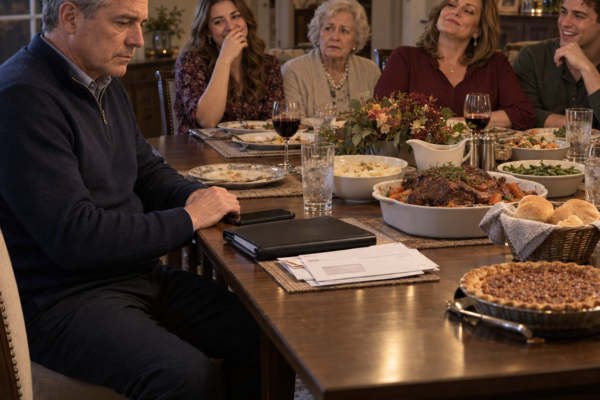
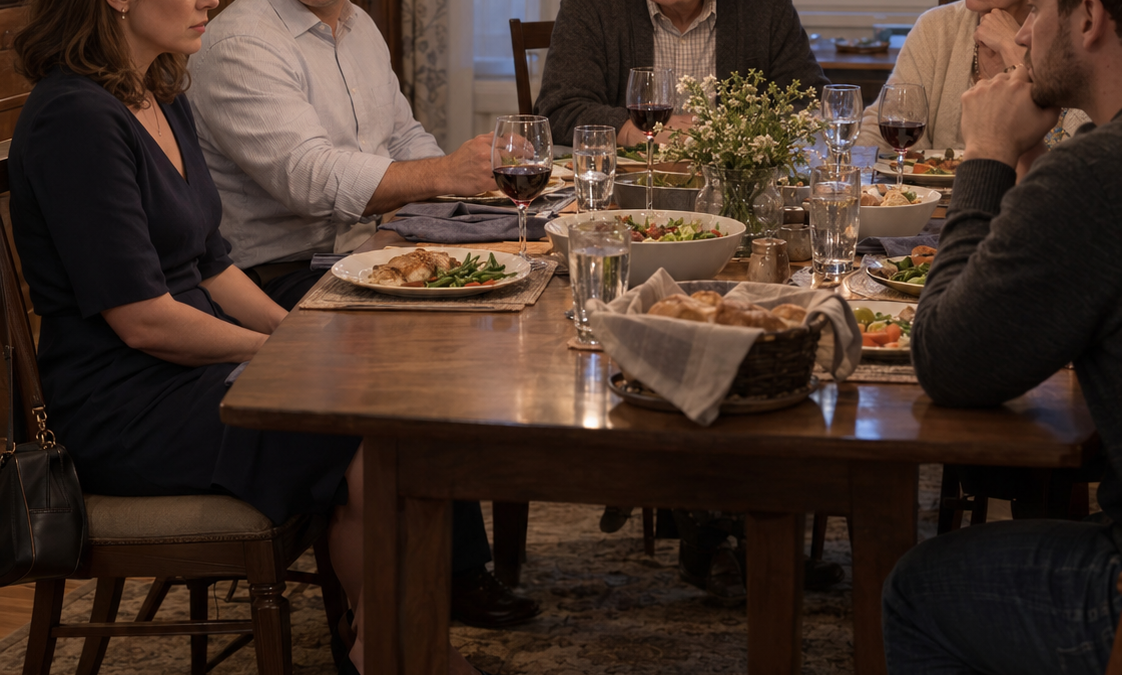
That Sunday was my parents’ monthly family dinner.
My parents had hosted one since my brother and I left home.
Nothing formal.
Chicken.
Potatoes.
Wine.
My aunt sometimes came.
My brother Nate usually did.
Colin said he would meet me there because he had errands.
I ordered a rideshare.
When I arrived, my father was near the front window.
He watched the car pull away.
He did not ask immediately.
Dad’s name was Thomas Mercer.
He had taught mechanical engineering at NC State for almost thirty years.
Calm man.
Patient.
The type who could spend twenty minutes explaining why your lawn mower sounded wrong without once touching it.
He believed adult children should be allowed to make adult mistakes.
That meant he rarely interfered.
We ate.
Dad asked Nate about work.
Mom complained about a neighbor’s fence.
My aunt told a story I had already heard twice.
Then Dad looked at me.
“Rachel, where’s your Honda?”
I opened my mouth.
Colin answered.
“Mom’s using it.”
Dad turned toward him.
“Your mother?”
“Yeah. Her transmission died.”
“So Rachel lent it to her?”
Colin smiled.
“I gave it to Mom for now. She needs it more.”
I saw my mother stop moving.
My aunt lowered her fork.
Nate looked directly at me.
Dad did not react the way Colin expected.
No anger.
No lecture.
He simply asked:
“Did Rachel agree?”
Colin laughed softly.
“We’re married, Thomas.”
Dad nodded.
“That wasn’t what I asked.”
Colin’s smile thinned.
“She was being difficult about it.”
I felt heat climb my neck.
Difficult.
I had said no.
Three times.
In Colin’s retelling, the problem was not that he ignored me.
The problem was that I made ignoring me inconvenient.
Dad looked at me.
“Rachel?”
For one terrible second, I almost lied.
I nearly said:
It’s fine.
Diane only needs it temporarily.
We’re working it out.
That was how practiced I had become at cleaning up Colin’s decisions after he made them.
I looked at him.
He was watching me.
The message in his expression was familiar.
Do not embarrass me.
Something inside me finally answered:
Why not?
“No,” I said.
The table stayed quiet.
Dad asked:
“Whose name is on the title?”
“Mine.”
Colin made an irritated sound.
“Why are we making this legal?”
Dad still did not look at him.
He looked at me.
“What do you want?”
The question hit me harder than any speech could have.
I had spent four years asking:
What does Colin need?
What does Diane need?
What keeps dinner peaceful?
What prevents another argument?
What would make me look selfish?
Nobody had asked what I wanted because eventually I stopped asking too.
“I want my car back.”
Dad nodded.
“Okay.”
That was all.
Colin pushed his plate away.
“This is unbelievable.”
I turned to him.
“The car needs to be back in my driveway tomorrow by noon.”
“You’re giving me a deadline?”
“Yes.”
“What are you going to do if it isn’t?”
I took a breath.
“I’ll handle my own property.”
He laughed.
“You sound ridiculous.”
Dad finally looked at him.
“No. She sounds clear.”
Colin stood.
My mother said:
“Sit down.”
He didn’t.
“I’m not staying here while everybody gangs up on me.”
Nate said:
“Nobody took my sister’s car but you.”
“Nate.”
I raised a hand.
“I don’t need help arguing.”
That surprised everyone.
Including me.
I looked at Colin.
“Tomorrow. Noon.”
He left.
I did not chase him.
When dinner ended, Dad offered to drive me home.
In the car, he said nothing for almost ten minutes.
Then:
“I’m sorry.”
“For what?”
“I noticed things.”
I looked at him.
“What things?”
“You ask Colin with your eyes before you answer people.”
My stomach tightened.
“I do not.”
Dad glanced over.
I knew immediately he was right.
He continued.
“I didn’t say anything because I thought saying it would make you defend him.”
It would have.
“You were right.”
“I wish I hadn’t been.”
He dropped me off.
Colin was not home.
I went into our office.
For months, Colin had handled most of the household bill payments.
Not because I was incapable.
Because his work schedule gave him more flexibility during office hours.
I had access to everything.
In theory.
I opened the joint account.
Then I started reading.
Really reading.
Not checking whether the mortgage cleared.
Not glancing at the balance.
Line by line.
There were the expected expenses.
Utilities.
Mortgage.
Insurance.
Groceries.
Then transfers.
Small enough that I had overlooked them.
$300.
$450.
$600.
Regular transfers labeled simply:
Diane.
I went backward.
Eighteen months.
Then two years.
The total made me sit back.
$18,740.
Some I remembered approving.
Most I did not.
I opened our credit-card statements.
A tire shop near Diane’s house.
Home improvement store.
Pharmacy.
A furniture store.
Church event tickets.
None enormous.
Together, another several thousand.
I did not feel angry at Diane.
Not yet.
I felt stupid.
Then I stopped that thought.
Colin had counted on me not reviewing.
That did not make me stupid.
It made the arrangement unhealthy.
I created a spreadsheet.
Not dramatic.
Dates.
Amounts.
What I recognized.
What I did not.
At 11:40, Colin came home.
He saw the laptop.
“What are you doing?”
“Looking at our accounts.”
His entire expression changed.
Not fear.
Annoyance.
“Why?”
I turned the screen.
“Did you send your mother almost nineteen thousand dollars from our joint account in the last eighteen months?”
He barely looked.
“Probably.”
“Probably?”
“It wasn’t all at once.”
“I can see that.”
“You knew we helped her.”
“I knew about some of it.”
He sat down.
“You really want to do this tonight?”
“Yes.”
He rubbed his face.
“I earn more than you.”
There it was.
A new rule.
Not “we’re married.”
Now his greater income apparently gave him more authority.
“Our joint account pays our shared expenses.”
“And I put more into it.”
“Then we can change the contribution percentages.”
He stared.
“What?”
“We can separate everything except shared bills.”
He laughed.
“So because of a car, you’re blowing up our finances?”
“No.”
I closed the laptop.
“Because you think marriage means I lose the right to say no.”
He slept in the guest room.
At 9:12 the next morning, Diane called.
“The car is outside.”
I looked through the window.
The Honda sat in the driveway.
She was beside it.
Colin was nowhere around.
I opened the door.
Diane held out the key.
Her face was tight.
“You made your point.”
“I asked for my car.”
“He says you embarrassed him in front of your family.”
“I told the truth in front of my family.”
She crossed her arms.
“I raised Colin to take care of family.”
“So did my parents.”
“Apparently differently.”
“Yes.”
We stood there.
Then I asked something I genuinely wanted answered.
“Did you know I said no?”
She looked away.
That was enough.
“You did.”
“Colin said you were being stubborn.”
“That is not permission.”
“I needed a car.”
“I know.”
“You have one.”
“I have this one because I saved for it.”
Her expression hardened.
“You young people are so obsessed with mine and yours.”
I almost laughed.
“Then give me your house keys.”
“What?”
“If mine and yours aren’t important.”
She stared at me.
“That’s different.”
“Yes.”
For once, we agreed.
She left.
I took the Honda to the dealership that afternoon and had the spare key reprogrammed.
Not because I thought Colin would steal it again.
Because I wanted one action that did not require his approval.
Then I called a financial counselor.
Not a divorce lawyer.
A counselor.
I wanted to know what responsible separation of household finances looked like inside a marriage.
We changed direct deposits.
Colin’s income went to his account.
Mine went to mine.
We each transferred an agreed amount into the household account.
Mortgage.
Utilities.
Groceries.
Insurance.
Everything else stayed separate.
Colin hated it.
“You’re treating me like a roommate.”
“No.”
“I’m treating money like something adults discuss before spending.”
He refused couples counseling for two months.
During those two months, the marriage became painfully clear.
Without shared money to quietly redirect, Colin had to make actual choices.
If Diane needed five hundred dollars, it came from him.
If he promised his sister help, it came from his weekend.
If he wanted to buy something for his mother, he did not need my permission.
He also could no longer turn my refusal into the problem.
The first month, he sent Diane almost nine hundred dollars.
Then he complained that he could not afford a golf weekend.
I said nothing.
He waited.
“You’re not going to say anything?”
“What do you want me to say?”
“I don’t know.”
“Then I won’t invent something.”
That irritated him more than an argument would have.
The most surprising change was Diane.
She called less.
Not because I had cut her off.
Because Colin started saying no.
Once the help came entirely from his own discretionary money, limits suddenly existed.
That taught me more than any conversation.
Three months after the dinner, Colin finally agreed to counseling.
Our first session was awful.
He spent twenty minutes explaining that I had become rigid about money.
The therapist asked:
“What does Rachel say the issue is?”
“That I gave Mom the car.”
“No,” I said.
He looked at me.
“The issue is that I said no and you decided my no did not count.”
The therapist asked Colin:
“Did she say no?”
He stared at the floor.
“Yes.”
“And you took the car anyway?”
“Yes.”
Nothing dramatic happened.
No one declared him abusive.
No one told me to divorce him.
We simply had to sit inside the plain facts.
That was harder.
Colin eventually admitted something I had not expected.
He felt responsible for his mother’s entire life.
After his father died, Diane repeatedly told him he was “the man of the family.”
He was twenty-three.
He turned that sentence into a permanent job.
Every problem Diane had felt like proof that he was failing.
“That explains it,” I told him.
“It doesn’t excuse it.”
He nodded.
That was the first useful conversation we had in months.
We stayed married for another year.
People sometimes assume that means counseling worked.
It did.
Just not by saving the marriage.
Counseling made us more honest.
Honesty showed us that Colin still believed partnership required more merging than I could tolerate, and I needed more autonomy than he could experience without feeling rejected.
Neither of us was willing to return to the old arrangement.
Eventually, we stopped trying to prove one person was wrong for wanting something different.
The divorce was quiet.
We sold the house.
Split the equity according to our agreement.
Kept our own retirement accounts.
No courtroom spectacle.
No revenge.
I kept the Honda.
Of course I kept the Honda.
Diane never apologized.
For years, that bothered me.
Then it didn’t.
My relationship with my parents changed too.
Dad stopped pretending not to notice when I was struggling.
I stopped pretending noticing was interference.
One Sunday, about six months after the divorce, I drove the Honda to my parents’ house for dinner.
Same driveway.
Same dining room.
Nate was late.
Mom made too much food.
Dad stood at the front window when I pulled in.
When I walked through the door, he smiled.
“Good tires still?”
I laughed.
“Excellent tires.”
During dinner, nobody asked me what Colin thought.
Nobody needed to.
Afterward, I stayed late helping Mom clean the kitchen.
When I finally left, Dad walked me to the driveway.
He rested one hand on the roof of the Honda.
“You know I never cared about the car.”
“I know.”
“I cared that somebody convinced you needing permission was the same thing as being married.”
That sentence stayed with me.
I opened the driver’s door.
“Me too.”
The car had never been the marriage.
It was simply the first thing large enough, visible enough and undeniably mine enough that I could no longer pretend the pattern was normal.
For years, Colin said family should not keep score.
I agree with him now more than I did then.
Love is not a ledger.
Marriage is not a transaction.
But neither one requires pretending boundaries are selfish.
There is a difference between generosity and access.
Between sharing and surrender.
Between saying, “What’s mine can help you,” and hearing somebody else decide:
“What’s yours is mine to give.”
I learned that difference standing in my parents’ dining room while my husband casually explained why his mother deserved my car more than I did.
The important part was not that my father defended me.
He didn’t need to.
He asked me one question.
What do you want?
Everything changed when I finally answered it myself.