After Nine Months Overseas, I Came Home to Find My Clothes, Boots, and Memories Stuffed Into Black Trash Bags—Because My Parents and Sister Had Turned My House Into Her Vacation-Rental Business and Expected Me to Keep Living on Base
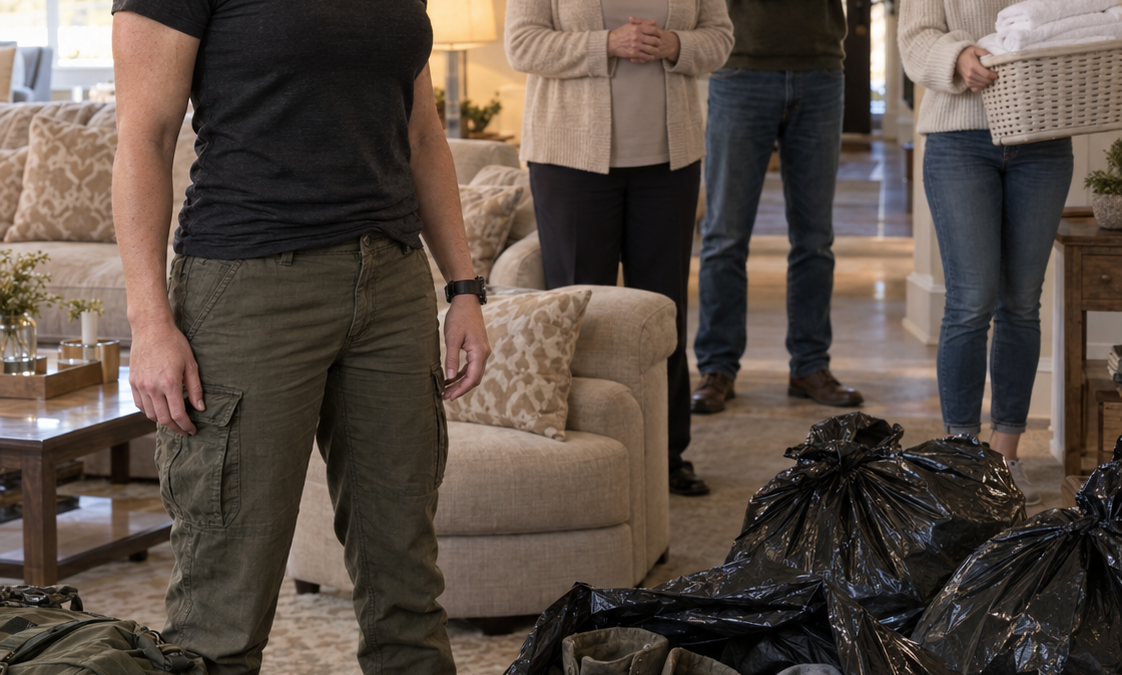
The first thing I found when I came home from a nine-month deployment was one of my combat boots inside a black trash bag.
Not beside my bed.
Not in my closet.
Inside a bag normally used for yard waste.
I had flown into Raleigh the night before after a long sequence of military flights, layovers and bad airport coffee.
By the time I reached my house outside Fayetteville, I had been awake for almost twenty-six hours.
I remember unlocking the front door and thinking something smelled different.
Lemon cleaner.
Artificial vanilla.
Then I saw the bags.
Eight of them lined against the wall inside the downstairs den.
I opened the first.
Boots.
The second held clothes.
The third contained books and photographs.
Someone had wrapped my grandfather’s framed picture in one of my bath towels.
My name is Mara Ellison.
I was thirty-five years old, a Sergeant First Class in the United States Army, and I had spent most of the previous nine months working maintenance logistics during an overseas rotation.
Not glamorous.
Not secret.
Long days.
Cold mornings.
Aircraft parts, supply requests, readiness reports and people trying to solve problems with too few hours and not enough sleep.
Three days before coming home, I was still packing a military duffel.
Now somebody else had packed the rest of my life.
I walked through the house.
My sofa was gone.
Dining table gone.
The walls had been repainted beige.
There were identical white towels folded in the guest bathroom.
Small bottles of shampoo had been arranged in a basket.
A laminated information card sat near the television.
Wi-Fi instructions.
Check-out instructions.
A polite reminder about noise after ten.
For several seconds, I wondered whether exhaustion had broken something in my brain.
Then my mother walked in.
She stopped so quickly her slipper dragged against the floor.
“You’re back.”
“I live here.”
She blinked.
“You said Wednesday.”
“It is Wednesday.”
“We thought next Wednesday.”
There are lies people invent carefully.
That one had not received much preparation.
My father appeared behind her.
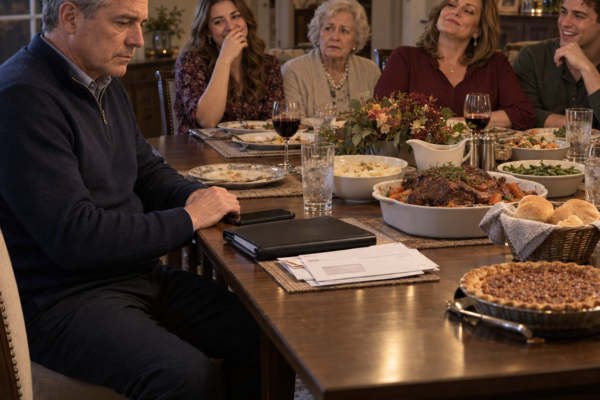
Richard Ellison was sixty-six, retired from a utility company and fully capable of filling any room with the belief that he was the adult most qualified to decide things.
Behind him came my younger sister Chloe.
Thirty-two.
Married briefly in her twenties, divorced now, no children.
She carried a laundry basket filled with matching white towels.
“What happened to my house?”
Nobody answered.
I looked at Chloe.
“You’re doing laundry.”
She put down the basket.
“Mara, don’t start until we explain.”
That was how I learned my house had become part of Chloe’s short-term rental business.
Chloe had been trying to build the company for nearly two years.
At first she managed one downtown condo for a friend.
Then two cabins.
Then several furnished apartments.
She was good at photographs, online listings and talking owners into trying weekend rentals.
She was less good at keeping clients.
Some properties underperformed.
One owner canceled after neighbors complained.
Another sold.
By the time I deployed, Chloe was struggling.
I knew that.
I did not know my home had become the solution.
Dad said:
“The property was sitting unused.”
“I was deployed.”
“Exactly.”
“That doesn’t mean abandoned.”
Mom stepped in.
“Nobody said abandoned.”
“You packed my belongings into trash bags.”
“They’re heavy-duty bags.”
Chloe said it.
I turned toward her.
“Is that supposed to make me feel better?”
She looked away.
Dad explained the arrangement.
At least his version.
Two months after I left, Chloe needed another property to keep her business afloat.
My house was empty.
Dad had the emergency smart-lock administrator code.
I had given it to him years earlier because military schedules make emergency home repairs difficult.
He could let in a plumber.
Check storm damage.
Reset the thermostat.
Normal things.
Instead, my parents and Chloe entered the house.
Moved my furniture into a storage unit.
Repainted.
Bought inexpensive rental furniture.
Photographed the rooms.
Listed the address.
Nobody called me.
“Why?”
That was the question I kept asking.
Mom said I was stressed enough overseas.
Dad said they did not want to distract me.
Chloe said she intended to tell me once the property started earning consistently.
Every explanation required pretending I had not owned a telephone.
“How many people stayed here?”
Chloe’s expression tightened.
“A lot.”
“How many?”
“I’d have to check.”
Dad interrupted.
“Does the exact number matter?”
“Yes.”
He sighed.
“Here we go.”
That phrase.
Here we go.
The family signal that Mara was becoming difficult.
I heard it growing up whenever I objected to something Chloe needed.
When she borrowed my car without asking.
When Mom volunteered me to help her move.
When Dad told me to use part of my enlistment bonus to cover Chloe’s community-college tuition because she was “finding herself.”
I had always been the durable child.
Chloe was the one you protected.
Military service only hardened that pattern.
Mara can handle it.
Mara will adapt.
Mara doesn’t need comfort.
Dad told me the current bookings ran another two weeks.
“You can stay on base temporarily.”
“I don’t have permanent quarters there.”
“Then a hotel.”
Mom added:
“We’ll cover it.”
I stared at her.
“You’re offering to buy me a hotel room so other people can rent my house.”
“It’s only two weeks.”
“No.”
Chloe became angry.
“Mara, refunds will destroy my rating.”
“That sounds like your problem.”
“It becomes everyone’s problem when my business folds.”
There it was.
Family math.
Her problem became ours.
My property stayed mine only until someone else’s need became larger.
I opened another bag.
My grandfather’s old field jacket was inside.
He had served long before I did.
When I was ten, he used to let me wear that jacket until the sleeves swallowed my hands.
After he died, I kept it folded in my closet.
Someone had shoved it beneath sneakers and old sweatshirts.
I folded it correctly.
Then retied the bag.
Dad watched.
I knew what he expected.
A fight.
I had a reputation for being blunt.
Not loud.
Direct.
If something was wrong, I usually said it.
That afternoon I was too tired to perform anger for people who had already decided it would prove them right.
I picked up my deployment bag.
“Where are you going?”
Mom asked.
“Upstairs.”
“Mara.”
“I’m showering.”
The bedroom no longer looked like mine.
White duvet.
Generic prints.
Two decorative lamps.
My dresser had been replaced by a cheaper one.
There were no photographs.
No books.
No evidence the owner existed.
It was strange how much that hurt.
I had spent years sleeping in barracks, tents, temporary quarters and rooms designed for people who would leave.
My own bedroom had been redesigned to feel exactly the same way.
Temporary.
Interchangeable.
Nobody home.
After showering, I should have slept.
Instead, I opened my laptop.
Years earlier I had created a property email account.
Every house-related service went there.
Utilities.
Insurance.
Smart lock.
Security camera.
Water.
Internet.
It was easier whenever I deployed.
I had not checked it carefully in months.
I started with the lock.
Dad’s administrator account had created dozens of temporary codes.
Different numbers.
Expiration dates.
Guest access.
Thirty-eight of them.
I wrote the number down.
Electricity usage showed obvious spikes on weekends.
Water too.
Then I opened a message automatically forwarded from a short-term rental platform.
Monthly host payout summary.
The listing belonged to Chloe Ellison Rentals.
The address was mine.
Seven months of payouts.
Gross booking revenue: a little over thirty-one thousand dollars.
That number surprised me.
The next detail changed the entire problem.
The payouts were going to a bank account ending in 4418.
I knew that number.
Dad had used the same account years earlier when I reimbursed him for materials after he helped repair my fence.
This was not Chloe’s account.
It was his.
I slept for three hours.
Then woke around seven to voices downstairs.
Someone was laughing.
I stayed upstairs.
Opened spreadsheets.
Downloaded payout summaries.
Matched booking dates against smart-lock logs and utility spikes.
I was not conducting a criminal investigation.
I was trying to understand what had happened inside my home.
Around nine, Chloe came upstairs.
“You okay?”
“No.”
She stood in the doorway.
“I know you’re mad.”
“How much did the house make?”
Her face changed.
“What?”
“Gross bookings.”
“I don’t know off the top of my head.”
“About thirty-one thousand.”
She looked surprised.
Not guilty.
Actually surprised.
That interested me.
“What did you think it made?”
“Maybe twenty.”
“Where did the money go?”
She folded her arms.
“Expenses.”
“What expenses?”
“Cleaning. Furniture. Storage. Platform fees. Mom and Dad put money into getting the place ready.”
“Where did the rest go?”
“Dad handles the account.”
There it was again.
I asked:
“What was your arrangement?”
“Why?”
“Because it’s my house.”
Chloe sat in the chair near the window.
She suddenly looked less certain.
“Dad said you agreed.”
I stared at her.
“To what?”
“Letting us use it until you got back.”
“I never spoke to Dad about this.”
“He said you did.”
“When?”
“Before you left.”
“No.”
The silence changed.
Chloe looked toward the hallway.
“That doesn’t make sense.”
“Apparently.”
She became defensive again.
“Mom said the same thing.”
“Then both of them lied.”
She shook her head.
“No. Dad said you didn’t want your name attached because of military housing rules or something.”
I almost laughed.
“What military housing rules?”
“I don’t know, Mara. I’m not in the Army.”
Convenient.
Then Chloe said:
“He told me the money was being set aside for you.”
I stopped.
“What money?”
“The owner share.”
There had apparently been an internal arrangement.
Chloe managed the listing.
Dad controlled money.
Revenue would cover expenses first.
Then Chloe received a management percentage.
The rest supposedly went into a reserve account for me.
“How much have you received?”
I asked.
Chloe hesitated.
“About six thousand total.”
Thirty-one thousand gross.
Six to Chloe.
Some legitimate cleaning costs.
Some furniture.
Storage.
Still a large gap.
“Have you seen the reserve account?”
“No.”
“Did you ever ask?”
“He said it wasn’t my business.”
That sounded like Dad.
“Did you ever ask me if any of this was okay?”
Chloe looked down.
“No.”
That mattered.
She had been lied to.
She had also accepted a version of the story that benefited her without checking with the person whose house she was using.
Both could be true.
We went downstairs together.
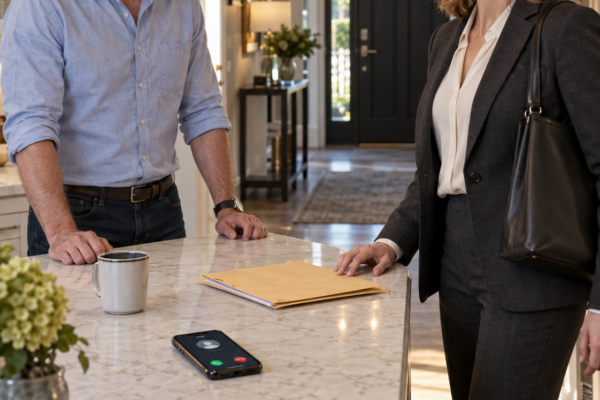
Dad was in the kitchen.
Mom was making coffee.
I put my laptop on the counter.
Dad saw the screen.
“What’s this?”
“The payout history.”
His face hardened.
“You had no business digging through Chloe’s company.”
“My address. My smart lock. My property email.”
Mom said:
“Mara, please.”
I looked at Dad.
“Where is the reserve account?”
He knew immediately what I meant.
Chloe turned toward him.
“Dad?”
He put down his mug.
“This is why I wanted everyone calm before we discussed numbers.”
“What reserve account?”
I repeated.
Dad said:
“There isn’t a separate account.”
Chloe went still.
“What?”
“The money stayed in our household account.”
“Why?”
“Because we fronted the setup costs.”
“How much?”
Dad started listing things.
Paint.
Furniture.
Storage.
Cleaning supplies.
Landscaping.
I asked for the number.
He did not have one.
Or would not give it.
Chloe’s voice sharpened.
“You told me Mara’s share was being held.”
“I said we were keeping track.”
“No. You said reserve account.”
Mom stepped toward her.
“Your father has been managing a lot.”
Chloe turned.
“Where is the money?”
Dad finally lost patience.
“We used some of it.”
“For what?”
Silence.
Then Mom said:
“The roof.”
Their roof.
Not mine.
My parents’ house had needed roofing work that summer.
I knew that.
I did not know strangers sleeping in my bed were helping pay for it.
Dad began explaining.
They had spent money setting up the rental.
They intended to reimburse everything once revenue stabilized.
Then the roof estimate came in.
Then a credit-card balance.
Then Mom needed dental work not fully covered.
“It was family money,” he said.
I looked at him.
“No.”
“It came from a family project.”
“No.”
His face reddened.
“You weren’t even here.”
That sentence finally clarified everything.
To Dad, absence reduced ownership.
If I wasn’t physically using something, my claim weakened.
Time.
Money.
House.
Even my own space.
Chloe stared at him.
“You told me Mara knew.”
He said:
“I knew she’d eventually understand.”
That was not the same thing.
Chloe left the room.
Mom followed.
I remained with Dad.
He lowered his voice.
“I was trying to help your sister.”
“With my house.”
“She needed the business.”
“So ask me.”
“You would have said no.”
“Yes.”
“Exactly.”
He said it as though that justified bypassing me.
I laughed.
For the first time since returning.
Not because it was funny.
Because there was nothing left to misunderstand.
Dad had not believed I would agree.
He had believed my answer did not matter.
I told everyone the remaining bookings would be canceled.
Chloe panicked.
Refunds.
Ratings.
Platform penalties.
I told her I would give her until noon to contact every guest professionally.
Nobody would arrive to find themselves locked out.
We would refund everything owed.
If the platform charged penalties, she and Dad could sort those out.
“You’re going to kill my company.”
“No.”
I looked at her.
“Your company used a property without the owner’s consent. This part ends today.”
She cried.
I hated that.
I did not change my answer.
By evening, the listing was offline.
The final three reservations were canceled.
One family was already traveling, so I agreed they could keep their two-night reservation because forcing them to find new lodging at the last minute would punish strangers for my family’s decisions.
I stayed at a hotel those two nights.
My choice.
After they checked out, I changed every access code.
Dad’s administrator account was removed.
The storage company delivered my furniture the following week.
Some pieces were damaged.
The sofa had a tear.
One photograph frame was broken.
My grandfather’s field jacket survived.
Chloe and I spent an entire Saturday unpacking black bags.
She volunteered.
I almost told her no.
Then let her.
At one point she held up an old Army PT shirt.
“Why do you still have this?”
“It’s comfortable.”
“It has a hole the size of Ohio.”
“Sentimental hole.”
She laughed.
It was the first normal sound between us since I came home.
Then she became serious.
“I should have called you.”
“Yes.”
“I believed Dad because it made things easier.”
“Yes.”
She looked at me.
“You don’t have to say yes like that.”
“I’m agreeing.”
“I hate it.”
“Good.”
She laughed again.
Our relationship did not magically heal.
But it became honest.
The money was more complicated.
Once Chloe reconstructed expenses, we found roughly eleven thousand dollars in legitimate costs connected to setting up and running the rental.
Furniture.
Cleaning.
Platform fees.
Storage.
Repairs.
Chloe had received a little over six thousand for management.
That left almost fourteen thousand dollars that should not have disappeared.
Dad eventually admitted most of it had gone toward his roof, cards and several household expenses.
He promised repayment.
I told him this was no longer something he could solve with a promise.
I did not call military lawyers.
I did not turn it into some theatrical prosecution.
I hired a local attorney because the issue was civilian property and money.
She sent my parents a formal demand.
Not for every dollar the house had grossed.
For documented net revenue that belonged to me after legitimate business expenses were subtracted.
Dad called that betrayal.
I reminded him:
“You used my property after deciding my answer didn’t matter.”
He said:
“We’re your parents.”
“I know.”
“You’d take your own parents to court?”
“If you force me to.”
He did not force me to.
My parents refinanced a small home-equity line and repaid the agreed amount over several months.
That cost them something.
It cost me too.
For most of the next year, my mother spoke to me only on birthdays and major holidays.
Dad barely spoke to me at all.
I had expected enforcing the boundary to feel victorious.
Mostly it felt quiet.
Chloe’s business survived.
Smaller.
She rebuilt with properties whose owners actually signed management agreements.
Imagine that.
Eventually she became better at it.
She also paid for half the damage to my furniture even though I never asked.
“I made money in your house,” she said. “I can own part of the mess.”
That mattered.
The deeper change came almost ten months after my return.
I was preparing for another training rotation when Mom called.
Her voice sounded cautious.
“Are you leaving again?”
“For six weeks.”
“What are you doing with the house?”
“Why?”
She went quiet.
Then:
“I was asking.”
That distinction mattered.
Nobody had asked before.
“I have a friend checking it.”
“Okay.”
No offer to manage it.
No claim that empty space was waste.
Just okay.
Dad took longer.
Nearly two years.
We were at a family barbecue at Chloe’s place.
He found me outside near the grill.
“I still think you could’ve handled it without an attorney.”
I looked at him.
“You still think you could’ve handled my house without asking.”
He almost smiled.
Almost.
“Maybe.”
“No maybe.”
He nodded.
Then said:
“I was wrong about that part.”
That part.
Richard Ellison was not built for sweeping apologies.
I accepted what was actually being offered without pretending it fixed everything.
“Thank you.”
He looked toward the house.
“I thought you’d always land on your feet.”
“I usually do.”
“I think I used that.”
That was the closest he ever came to naming the real problem.
My family had not treated me badly because they believed I was weak.
They did it because they believed I was strong enough to absorb whatever they took.
That is its own kind of exploitation.
People speak often about protecting the vulnerable member of a family.
They speak less about what happens to the person everyone labels capable.
The one who will understand.
The one who doesn’t need help.
The one who can sleep anywhere.
The one who will find another solution.
Eventually, competence becomes permission.
It shouldn’t.
The black contractor bags stayed in my garage for months after I unpacked.
I could have thrown them away.
I didn’t.
Every once in a while, I saw them and remembered how close I had come to accepting the entire situation simply because resistance would make everybody uncomfortable.
Now I deploy differently.
Before leaving, nobody gets permanent administrator access.
One friend has an emergency code that expires automatically.
My parents do not have a key.
Chloe doesn’t ask.
The first time she needed a place for visiting clients near Fayetteville, she texted:
Can I book your house for two nights if I pay you the normal rate? Totally fine if no.
I laughed when I saw it.
Then replied:
No rate. You can stay. Here’s a temporary code.
That was generosity.
Because I chose it.
There is a difference between sharing and surrendering.
It took me thirty-five years, nine months overseas and eight black trash bags to understand how large that difference could become.
When I came home, my family thought the worst thing they had done was move my belongings.
It wasn’t.
The worst thing was deciding my absence meant my consent could be assumed.
The house is mine again now.
Not just legally.
It feels like mine.
My photographs are back on the walls.
My ugly brown sofa came back from storage after being repaired.
Grandpa’s jacket hangs in the closet.
There are no matching white towels unless I buy them.
No check-out cards.
No strangers punching temporary codes into my front door.
Sometimes I sit on the back steps after work with coffee and hear nothing but the trees.
That silence used to feel ordinary.
Now it feels earned.
Not because I defeated my family.
Because I finally stopped confusing love with unlimited access.