After Eleven Years of Helping Build the Company My Husband Proudly Called “His,” He Brought His Pregnant Mistress Into Our Home, Used a Belt to “Teach Me a Lesson,” and Dropped Divorce Papers in Front of Me—Then Told Her I Was Finally Out of the Way, as if the Wife Who Had Built His Operations, Staff, and Client Network Had Always Been the Replaceable Part

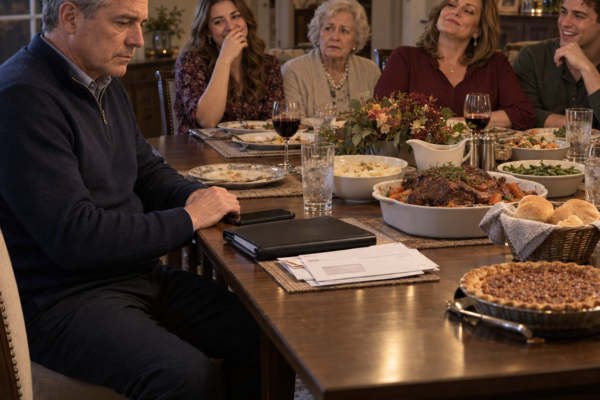
Adrian put the divorce papers on the dining table before he told me Vanessa was pregnant.
That detail stayed with me.
Everything had already been arranged.
The manila envelope.
My suitcase beside the staircase.
Vanessa sitting in my chair.
Champagne chilling in the kitchen.
They had planned the evening carefully.
I simply had not understood that I was the thing being removed.
My name is Nora Bennett.
I was forty-one that night.
Adrian and I had been married eleven years.
We had no children.
For most of our marriage, I believed our hardest shared responsibility was Bennett Hospitality.
Adrian founded the company eleven and a half years earlier.
One restaurant.
Forty-two seats.
A commercial lease he probably should not have signed.
A $90,000 loan from his uncle.
And enough confidence for ten people.
I met him six months later.
I was working operations for a hotel restaurant.
Adrian came to a vendor meeting trying to negotiate linen pricing.
He was terrible at it.
He offered the supplier more volume than his dining room could physically use because he thought “volume discount” meant bigger numbers automatically created savings.
I corrected him after the meeting.
He should have been offended.
Instead he asked:
“Do you want a job?”
I laughed.
He called three days later.
I accepted.
That decision changed my life.
At first, I handled payroll.
Then purchasing.
Then scheduling.
The restaurant grew.
A second location opened.
Then a third.
Adrian had instincts I didn’t.
He could walk into an empty building and imagine what people would feel eating there.
He understood branding.
Location.
Atmosphere.
He could persuade a landlord to give us six extra months of reduced rent simply because people enjoyed listening to him talk.
I understood what happened after he finished talking.
Labor.
Licenses.
Insurance.
Food costs.
Vendor terms.
Safety.
Training.
Compliance.
Delivery schedules.
Customer recovery.
Cash-flow timing.
Systems.
We complemented each other.
That was the word we used.
When we married, Bennett Hospitality had three locations.
By our tenth anniversary, it had eight.
Nearly four hundred employees.
Revenue large enough that magazines started calling Adrian an entrepreneur instead of a restaurant owner.
That distinction delighted him.
The articles usually described him as founder and visionary.
Sometimes they mentioned me.
His wife, Nora, oversees operations.
It sounded decorative.
I did not mind at first.
I did not need public recognition.
Inside the company, people knew.
When a freezer failed at 2 a.m., they called me.
When a vendor threatened to stop deliveries, me.
When a restaurant manager quit two days before Christmas week, me.
When investors wanted to know why labor cost increased 1.4 percent, me.
Adrian gave speeches about culture.
I made sure paychecks landed Friday morning.
For years, that arrangement felt like partnership.
Then outside investors arrived.
We sold thirty-five percent of the company to Meridian Growth Partners to fund expansion.
The deal gave Adrian founder control of his remaining shares.
I owned no founder equity.
I knew that.
It had been his business before I joined.
My compensation was excellent.
Bonus.
Retirement plan.
Profit-based incentives.
I never confused my work with legal ownership.
But Adrian slowly began confusing ownership with total authorship.
The language changed.
Our growth became his vision.
Our management team became his people.
Our new locations became his expansion.
At home, he still called me partner.
In public, less often.
I noticed.
I did not confront it enough.
Then Vanessa Cole joined as vice president of brand partnerships.
Thirty-two.
Sharp.
Fast.
Extremely good at making important people feel interesting.
She and Adrian traveled frequently for partnership meetings.
I trusted both of them.
That sentence is painful now.
Not because trust was foolish.
Because betrayal makes ordinary trust look embarrassing in retrospect.
It wasn’t.
Trust is what healthy relationships require.
Misusing it belonged to them.
I first suspected something three months before the divorce papers.
Adrian began protecting his phone.
Not dramatically.
Screen down.
Longer showers with it nearby.
Then Vanessa began bypassing operations.
A hotel partnership.
A beverage contract.
A promotional event.
Each time, I stopped the decision because basic requirements had not been met.
Each time, Adrian defended her.
“You’re too rigid.”
“I’m responsible for implementation.”
“She’s trying to grow us.”
“So am I.”
The fights became personal.
Vanessa called me territorial.
Adrian called me threatened.
I did not understand why until the night everything became obvious.
That evening, I came home at 8:20 after reviewing a failed refrigeration inspection at our newest location.
Vanessa’s car was outside.
I assumed we had an emergency meeting.
I walked in.
Adrian was upstairs.
Vanessa sat at the dining table.
My chair.
She looked completely comfortable.
“What happened?”
She smiled.
“Adrian wanted you home.”
I went upstairs.
He was in our bedroom.
His expression told me this was not a business meeting.
“What is she doing here?”
“We need to talk.”
“Then talk.”
He started with the vendor dispute.
I had rejected a partnership Vanessa approved.
The supplier lacked required insurance coverage.
That should have ended the discussion.
It didn’t.
Adrian said I had embarrassed her.
I said business decisions were not social validation.
He told me my problem was needing control.
I reminded him control of operations was literally my job.
Then he said:
“Not for much longer.”
I looked at him.
“What does that mean?”
His tone changed.
Colder.
More personal.
I tried to leave the room.
He moved into the doorway.
The next several minutes were the moment our marriage stopped being recognizable to me.
A belt was used as intimidation and humiliation.
He called it teaching me not to challenge him.
I will not describe the moment beyond that.
It does not become more meaningful because the details become more graphic.
What mattered was that my husband intentionally frightened and degraded me while the woman he was having an affair with waited downstairs.
When it ended, I went downstairs.
Vanessa was still there.
She saw my face.
She did not look shocked.
That told me enough.
The divorce papers were waiting.
Adrian came down behind me.
“Sit.”
I stayed standing.
Vanessa rested a hand on her stomach.
“Adrian and I are having a baby.”
I looked at him.
He did not apologize.
He said:
“This marriage has been over for a while.”
Apparently I had missed the meeting.
He pushed the divorce papers forward.
He explained his plan.
I would move into the downtown condo.
He would remain in the house.
Vanessa would eventually move in.
Attorneys would calculate a settlement.
Then I asked about Bennett Hospitality.
He smiled.
Not kindly.
“Nora, you work for Bennett.”
“I built Bennett with you.”
“You were compensated.”
Eleven years reduced to payroll history.
I looked at Vanessa.
She seemed relieved.
I realized Adrian had told her a version of the company where I was a useful employee-wife who had confused proximity with importance.
Maybe he believed it too.
“You think nothing changes if I leave?”
He shrugged.
“We have a management team.”
We did.
I had recruited most of it.
Trained it.
Protected it from Adrian’s habit of changing strategy after every conference dinner.
But I did not say that.
I called Dad.
Not because Dad was rich.
He wasn’t.
He had retired from managing a regional hardware distribution center.
Mom had been an elementary-school librarian.
Their house still had the kitchen cabinets installed when I was fifteen.
I called because I needed somewhere safe.
“Come home,” he said.
That was all.
I left.
Dad made coffee after midnight.
Mom sat beside me without asking invasive questions.
I told them enough.
Dad’s face became pale.
He did not threaten Adrian.
Did not announce he would “handle it.”
He said:
“Don’t sign anything tonight.”
It was good advice.
The next morning, I woke before six.
My entire professional life still existed.
That was almost disorienting.
My calendar had eleven meetings.
A restaurant manager needed approval for a replacement refrigeration unit.
A Meridian analyst wanted the revised labor forecast.
Adrian had apparently assumed I would receive divorce papers Thursday night and still run Friday operations.
That assumption clarified more than the papers did.
I opened my employment agreement.
I was an at-will executive.
No non-compete after termination under the current agreement.
No requirement to remain through transition beyond standard professional obligations.
I opened the executive handbook.
Then board reporting procedures.
At 7:02, I emailed Elaine Foster, Meridian’s representative and board chair.
Effective immediately, I am taking emergency leave and resigning from my role as COO.
I attached an orderly transition file.
Department heads.
Vendor contacts.
Current risks.
Open projects.
Compliance deadlines.
Nothing withheld.
Nothing sabotaged.
I wanted no revenge.
I wanted separation.
At 7:18, Adrian called.
Again at 7:21.
Vanessa at 7:29.
Then Adrian:
What the hell did you do?
At 8:03, Elaine called.
“Nora, is this real?”
“Yes.”
“Are you safe?”
That question surprised me.
“Yes.”
“Does your resignation relate to Adrian?”
“Yes.”
She waited.
I did not give details.
Not yet.
Then she said:
“Does Adrian understand the operational implications?”
“No.”
A pause.
“I suspected that.”
Adrian spent years convincing investors Bennett Hospitality had matured beyond founder dependency.
Technically, it had.
But it had not matured beyond operations.
No company does.
I had built a strong team.
That saved the business.
It also exposed Adrian.
By 9:30, three regional directors had asked who now had final authority.
At ten, our food distributor refused an urgent contract amendment because Adrian had never been an authorized operational signatory.
At eleven, Meridian requested an emergency board call.
Adrian called me nineteen times.
I answered none.
This was not punishment.
I had resigned.
He was the CEO.
The responsibilities he insisted belonged to his company now belonged to him.
The business did not collapse.
That is important.
Internet stories love collapses.
Real companies are harder to kill.
Our management team kept locations open.
People got paid.
Customers ate dinner.
But problems surfaced.
Adrian had no idea how much authority he had informally delegated to me because I had rarely forced him to notice.
Meridian noticed immediately.
Elaine asked for interim leadership.
Adrian proposed Vanessa.
That lasted approximately four minutes.
She had no operations experience.
Worse, the board discovered their relationship.
The affair itself was not automatically grounds for removal.
The reporting relationship mattered.
Vanessa reported into an executive structure Adrian controlled.
Several recent contract decisions benefiting her department were already under review because I had flagged them.
Now conflict-of-interest questions appeared.
Adrian told the board our personal life had nothing to do with business.
Elaine replied:
“Then stop making business decisions around your personal life.”
I heard that later from our controller.
Within two weeks, Meridian appointed an interim COO from outside the company.
Adrian remained CEO.
For a while.
That surprised some people.
Not me.
Boards do not usually turn into morality plays overnight.
They care about risk.
Performance.
Governance.
And numbers.
The numbers became uncomfortable.
Two expansion projects were behind schedule.
A financing covenant depended on maintaining operational margins.
The company had enough cash.
Not enough discipline.
Adrian had been approving promotional spending while delaying maintenance investment.
I had repeatedly moved money back toward operations.
Without me, those disagreements became visible rather than quietly solved.
Meridian restricted his discretionary authority.
He hated that.
Vanessa hated it more.
She had apparently believed Adrian personally controlled nearly everything.
The house.
Cars.
Company travel.
Corporate memberships.
Restaurant accounts.
He did not.
The house was jointly marital.
The cars were leased through the company.
The club membership belonged to Bennett Hospitality.
The travel budget belonged to Bennett Hospitality.
Adrian was wealthy.
But much of the lifestyle he performed as personal wealth was company infrastructure.
That was not a secret.
It was simply something Vanessa had never bothered to distinguish.
Neither had Adrian.
During the divorce, he demanded the house.
My attorney said no.
We sold it.
Equity divided according to the settlement.
He demanded I waive claims against several retirement and bonus accounts.
We negotiated.
Normal divorce.
No surprise deed.
No billionaire father.
No hidden trust.
I did not “take everything.”
I took what the settlement said was mine.
The company became the harder issue emotionally.
Adrian kept accusing me of abandoning something we built together.
That was ironic.
He had been the person insisting it was his.
Six weeks after I resigned, Elaine asked whether I would return temporarily.
I declined.
“Not even consulting?”
“No.”
“Why?”
“Because every solution cannot be Nora.”
She laughed.
“Fair.”
I started sleeping again.
That mattered more.
Vanessa stayed with Adrian through most of the divorce.
Her pregnancy was real.
I never doubted it.
Whatever happened between them afterward was not my story.
I heard they moved into a rented townhouse.
That detail circulated through mutual acquaintances as though it proved some grand reversal.
It didn’t.
Renting a townhouse is not tragedy.
Having a baby is not punishment.
The point was never for Vanessa to suffer.
The point was that I stopped subsidizing the fiction she and Adrian had built.
Adrian lost his CEO role seven months later.
Not because of me.
The board cited missed performance targets, governance failures and loss of confidence.
His founder shares remained his.
He was not poor.
He simply no longer had a company underneath every part of his identity.
For the first time, perhaps, he had to distinguish Adrian Bennett from Bennett Hospitality.
So did I.
I had spent eleven years describing myself through that company too.
Leaving created an empty space.
At first, I hated it.
Then I filled it.
I began consulting for restaurant groups struggling with expansion.
Small engagements.
Then larger ones.
Two former Bennett managers eventually joined me.
Not because I recruited them away.
Both had left independently months later.
We built a five-person operations consultancy.
No dramatic empire.
A good business.
Profitable.
Boring in healthy ways.
Dad occasionally asked if I regretted leaving.
“No.”
“Even the money?”
Sometimes.
That was the honest answer.
I walked away from future compensation that might have been substantial.
Choices cost things.
That does not make them wrong.
A year after the divorce finalized, I attended a hospitality conference in Chicago.
Adrian was there.
We saw each other across a ballroom.
He looked older.
So did I, probably.
He walked over.
“Hi.”
“Hi.”
For several seconds, we stood awkwardly.
Then he said:
“I heard your firm is doing well.”
“It is.”
He nodded.
“Bennett sold two locations.”
“I heard.”
Another silence.
Then:
“I was wrong about you.”
I almost asked which part.
Instead:
“Yes.”
He actually smiled.
Small.
Sad.
“I deserved that.”
Maybe.
I no longer needed him to.
He said Vanessa had given birth to a boy.
I said I hoped they were healthy.
They were no longer together.
I did not ask why.
Then Adrian said:
“I thought ownership meant I was the company.”
There it was.
The closest thing to insight I had ever heard from him.
“And?”
“It turns out companies are people doing work.”
I looked at him.
“That sounds familiar.”
He laughed.
“Yeah.”
We said goodbye.
No reconciliation.
No revenge.
No collapse at my feet.
I returned to the conference session.
That evening, I called Dad.
Not because I needed rescuing.
Because we talked every Sunday.
“How was Chicago?”
“Fine.”
“See anyone you know?”
I looked out the hotel window.
“Yes.”
“Anyone interesting?”
“Not anymore.”
Dad laughed.
Then asked whether I had eaten.
Ordinary conversation.
That was the life I wanted.
The night Adrian put divorce papers on the table, he believed he was removing me from everything valuable.
The marriage.
The house.
The company.
The lifestyle.
He was wrong about one thing.
The most valuable thing I carried out of that house was not an asset.
It was the part of me that had finally stopped agreeing to disappear so someone else could feel powerful.